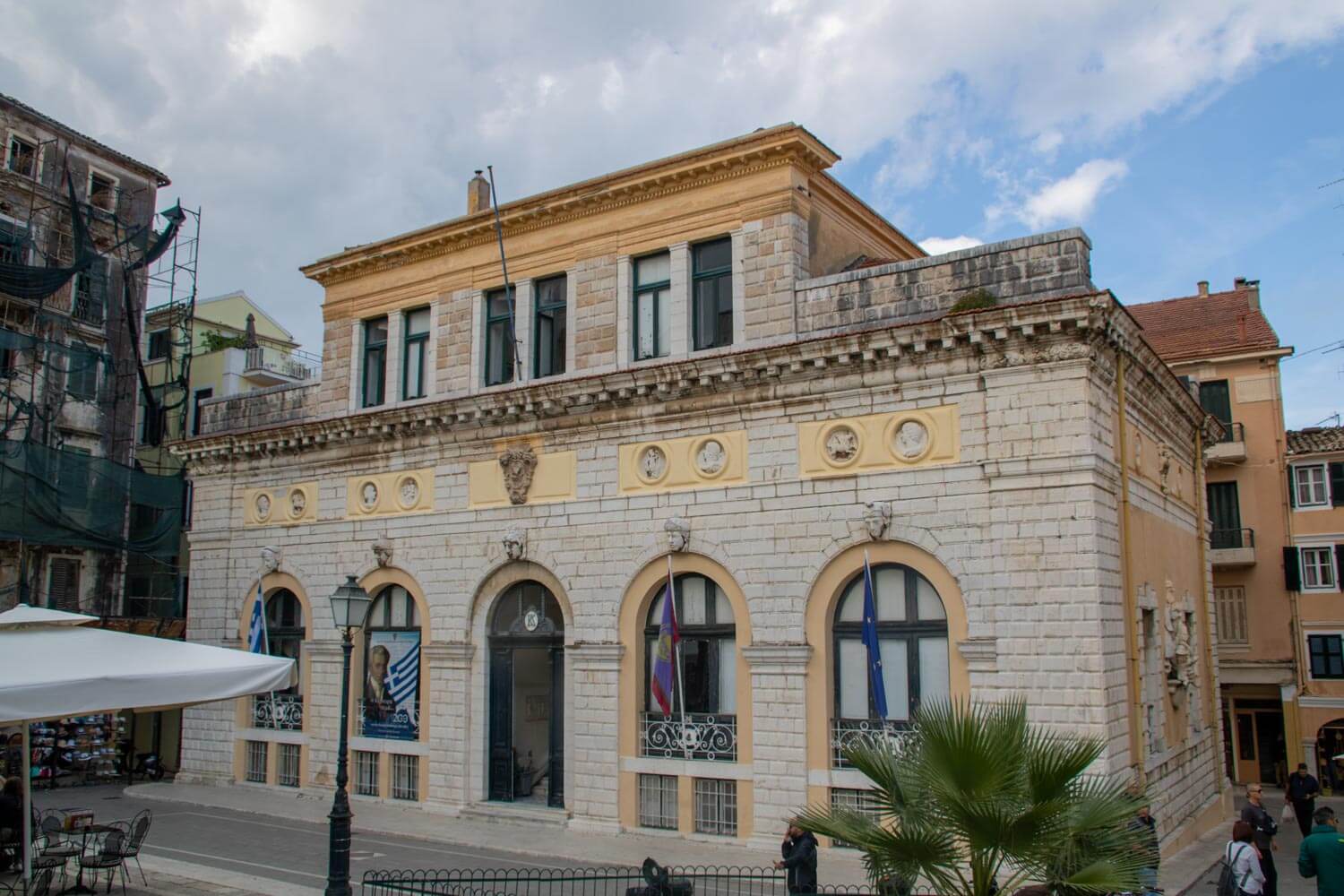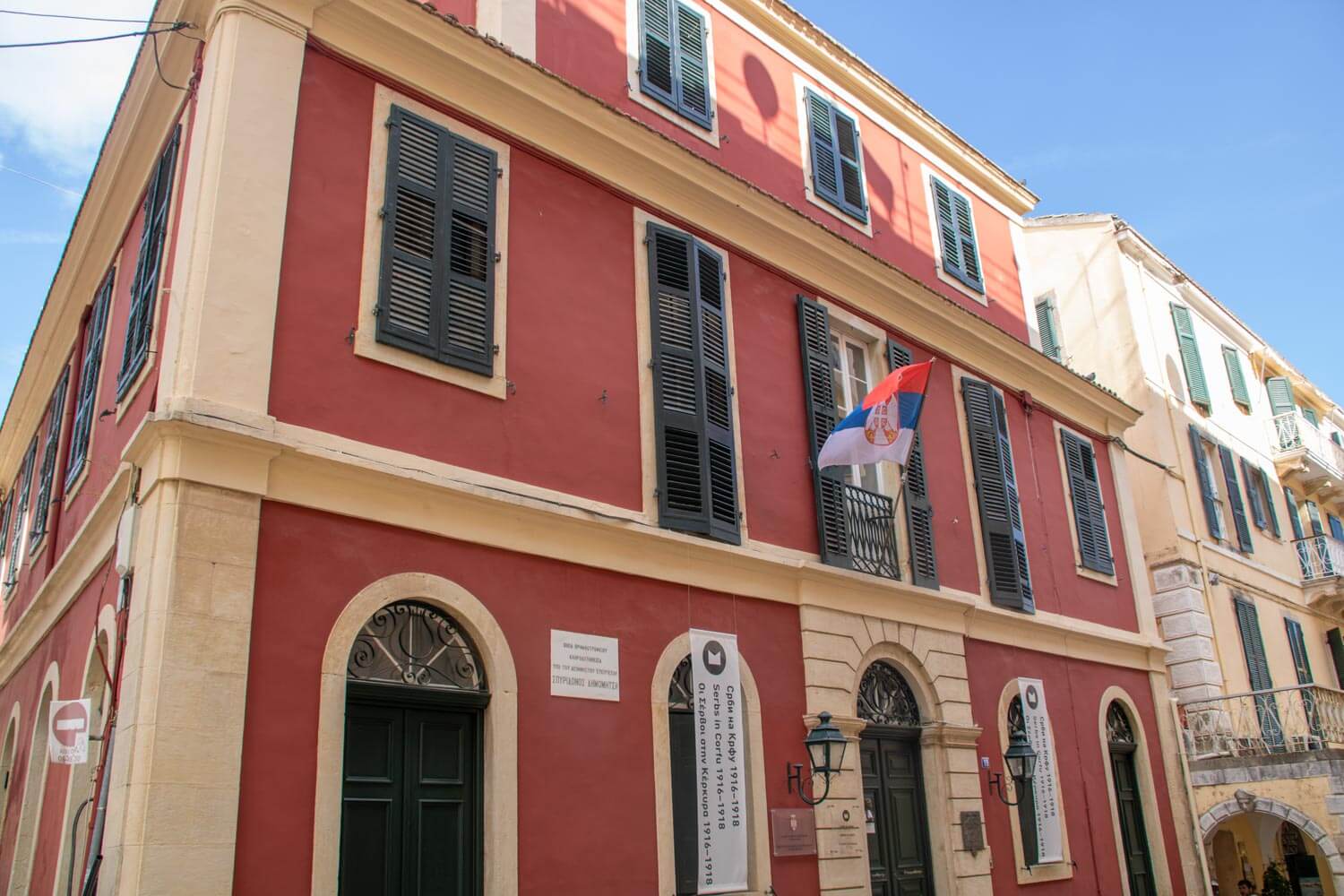
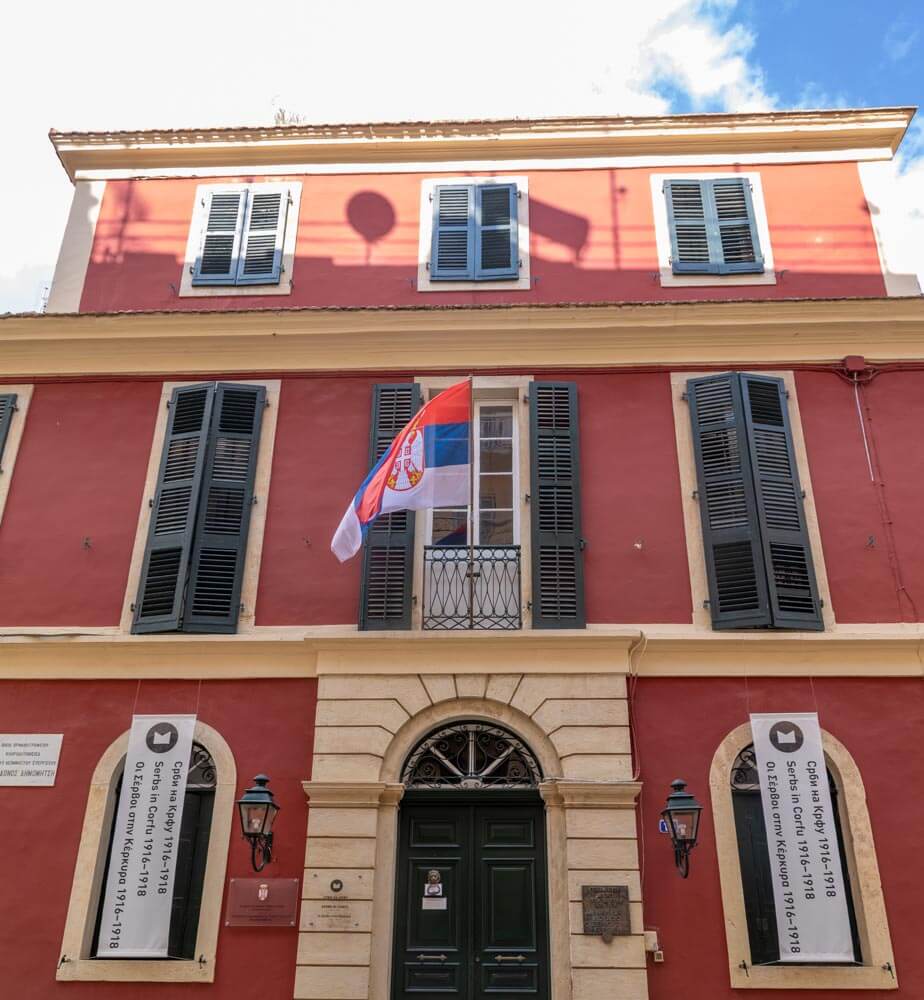
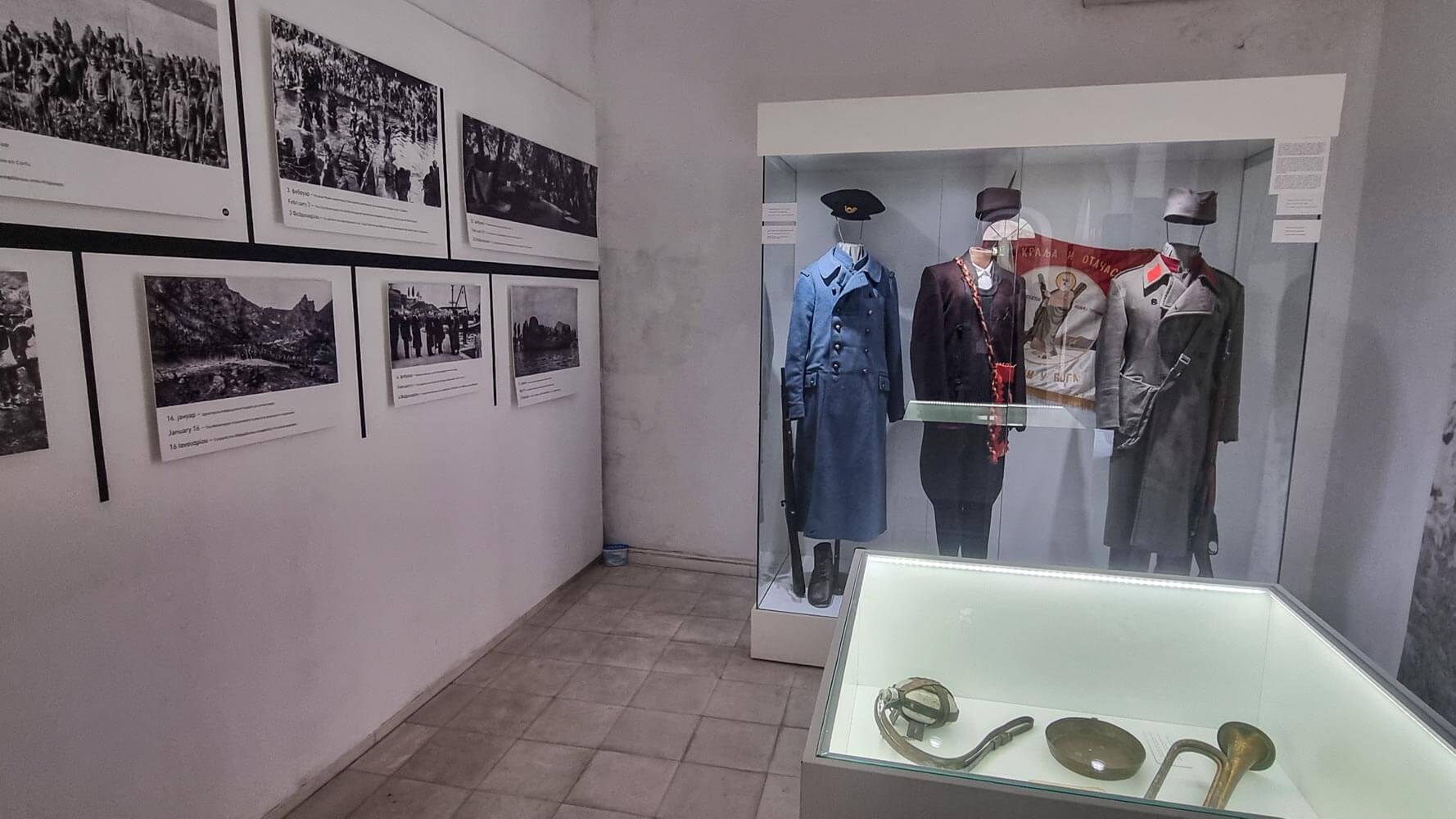
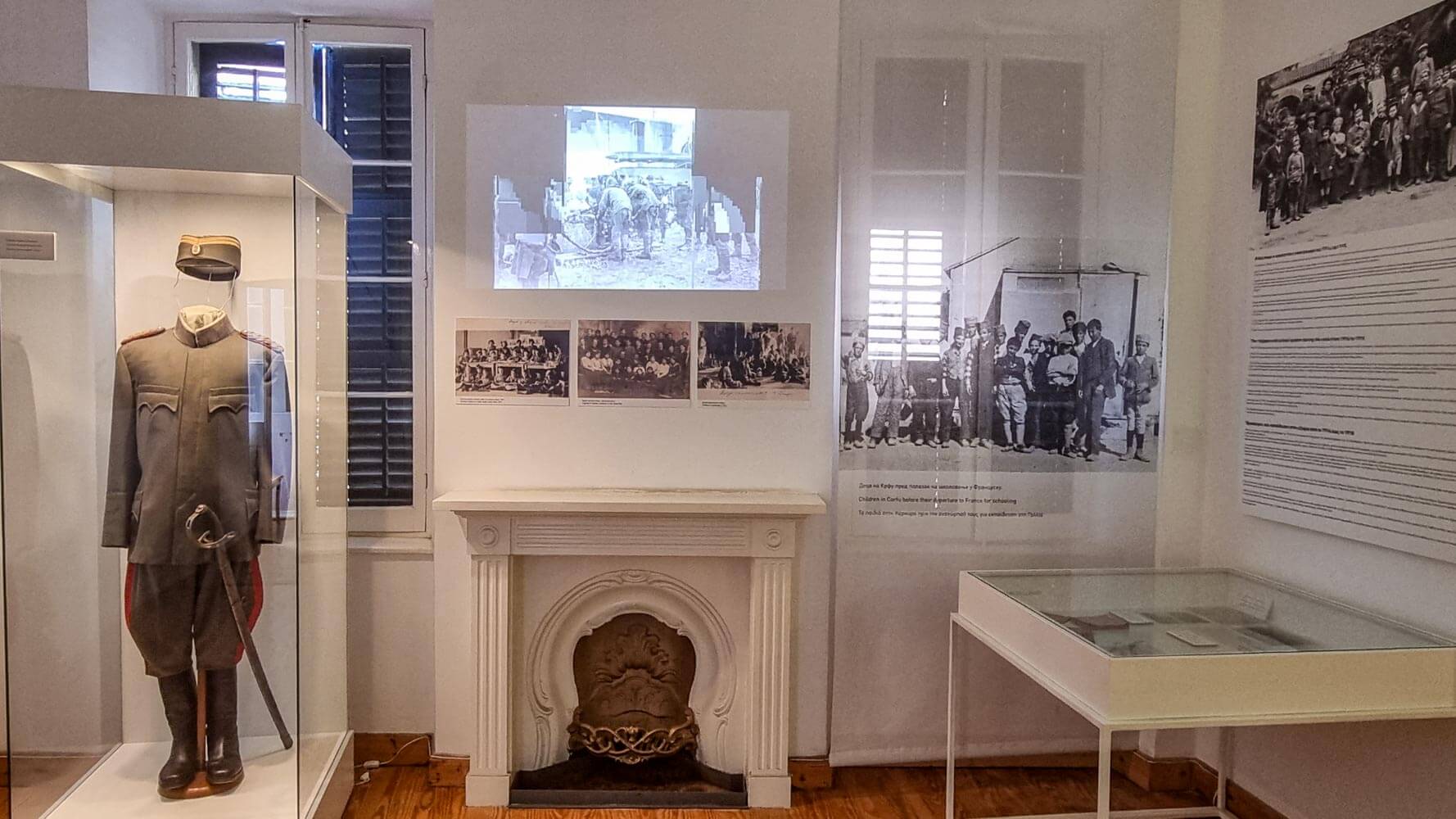
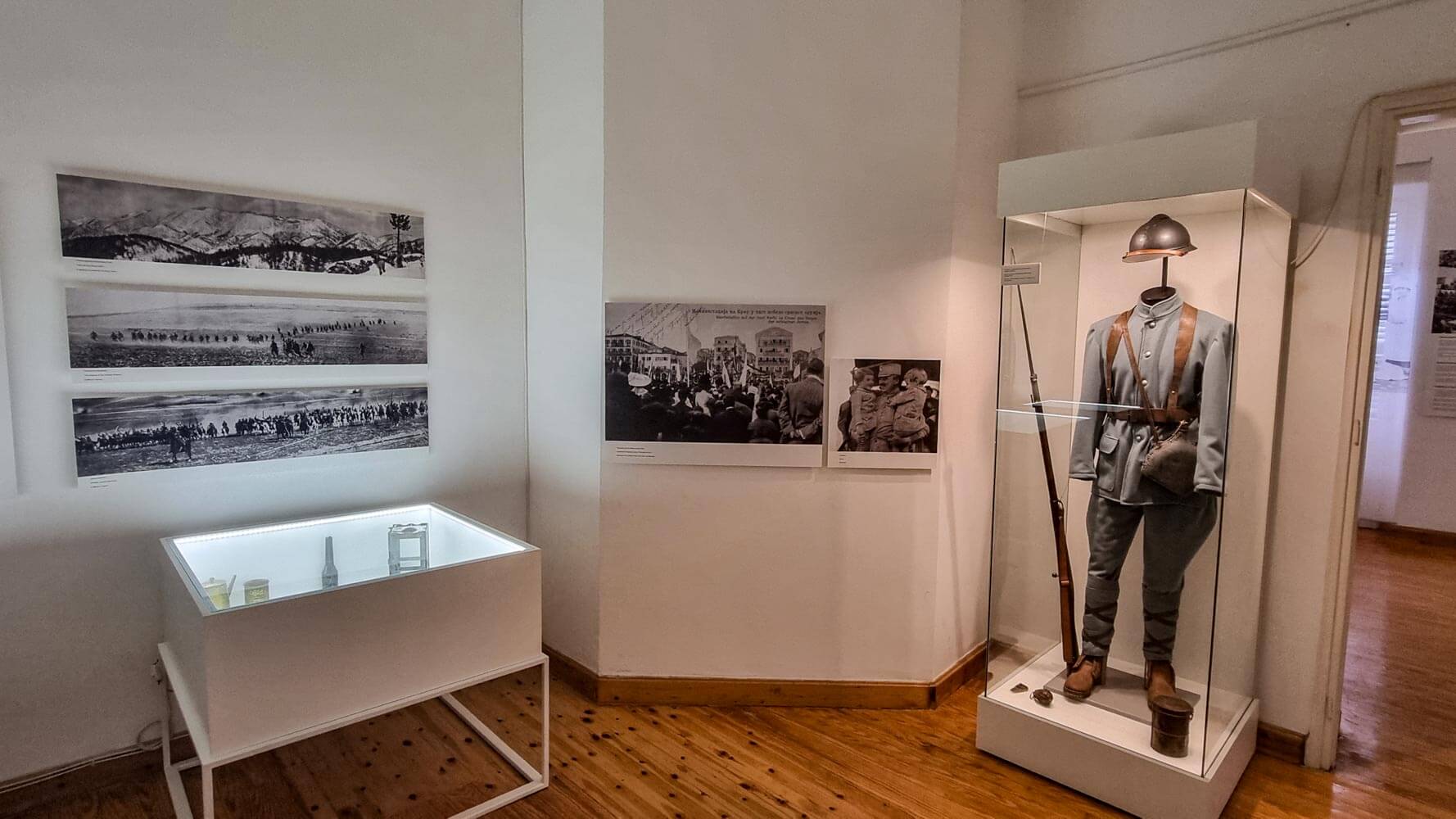
The Serbian Museum of Corfu is a museum in Corfu Town housing rare exhibits about the Serbian soldiers’ tragic fate during the First World War, also called the Great Retreat.
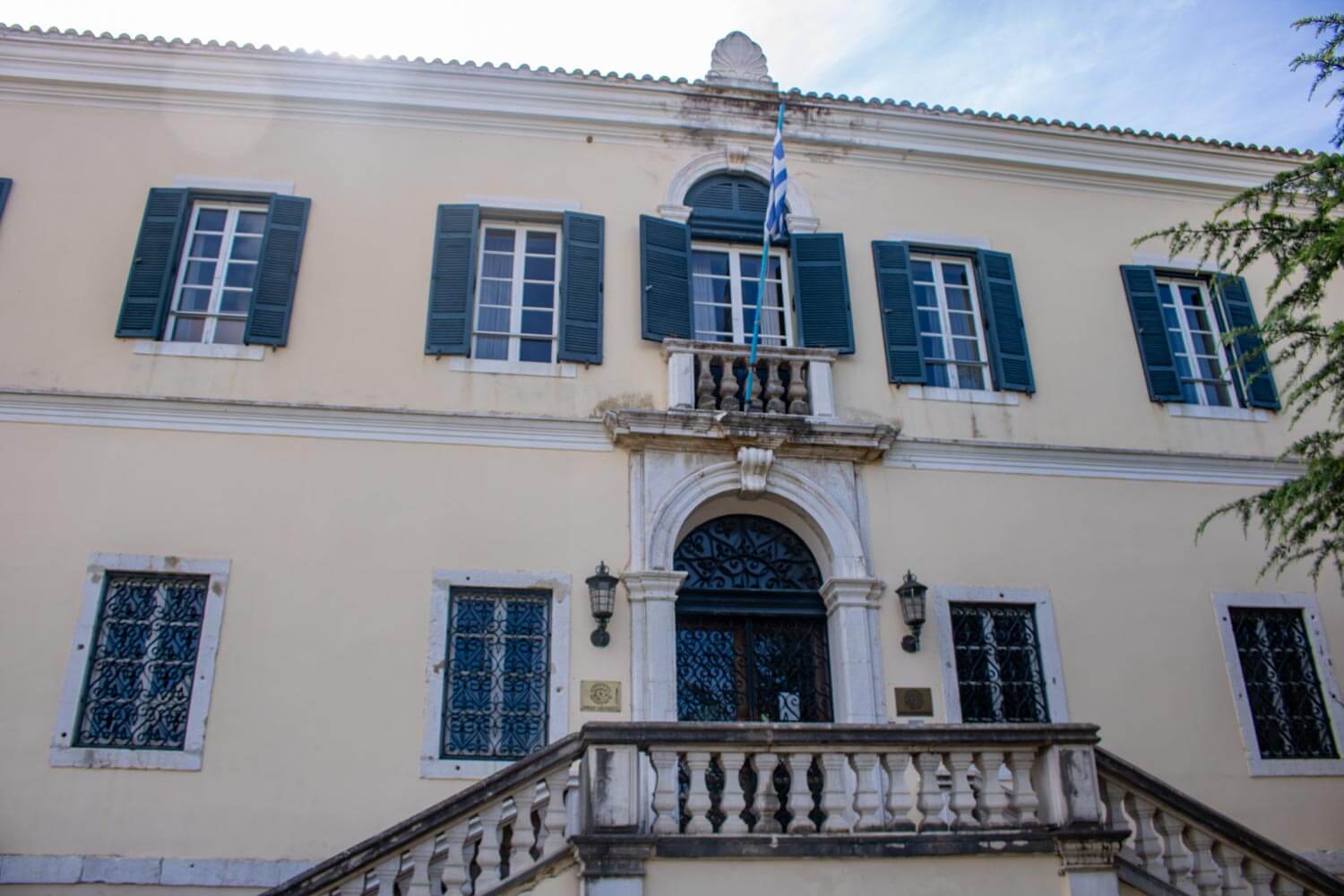
The neoclassical building in which the museum is located was granted by the Municipality of Corfu to the Serbian community for the remembrance of the tragedy that involved the largest exodus in recent history. The Austro-German attack on Serbia, which started on 6 October 1915, resulted in the destruction and withdrawal of the Serbian army after which people fled the country into Albania and onwards to Corfu. An estimated 250,000 lives were lost during the battles and from the cold weather, famine, diseases, and hardships during captivity. Between 18 January and 21 February 1916, 43 allied ships transported the remnants of the Serbian army and thousands of civilians to Corfu.
In total around 150,000 Serbs found refuge in makeshift camps on the island. Due to the overwhelming number of refugees, many were left in the cold in the countryside without sufficient food and shelter, resulting in many more deaths. To prevent the spread of diseases among the refugees and Corfiote population, a transit center was set up on the small island of Lazaretto where arriving people were disinfected.
The first dead bodies were buried on the small island Vido, when the first Serbians arrived there, but more drastic measures were taken when the deads multiplied dramatically. A French medical ship full of bodies was buried at sea. In 1939 a mausoleum was built on Vido to place the remains of deceased Serbs.
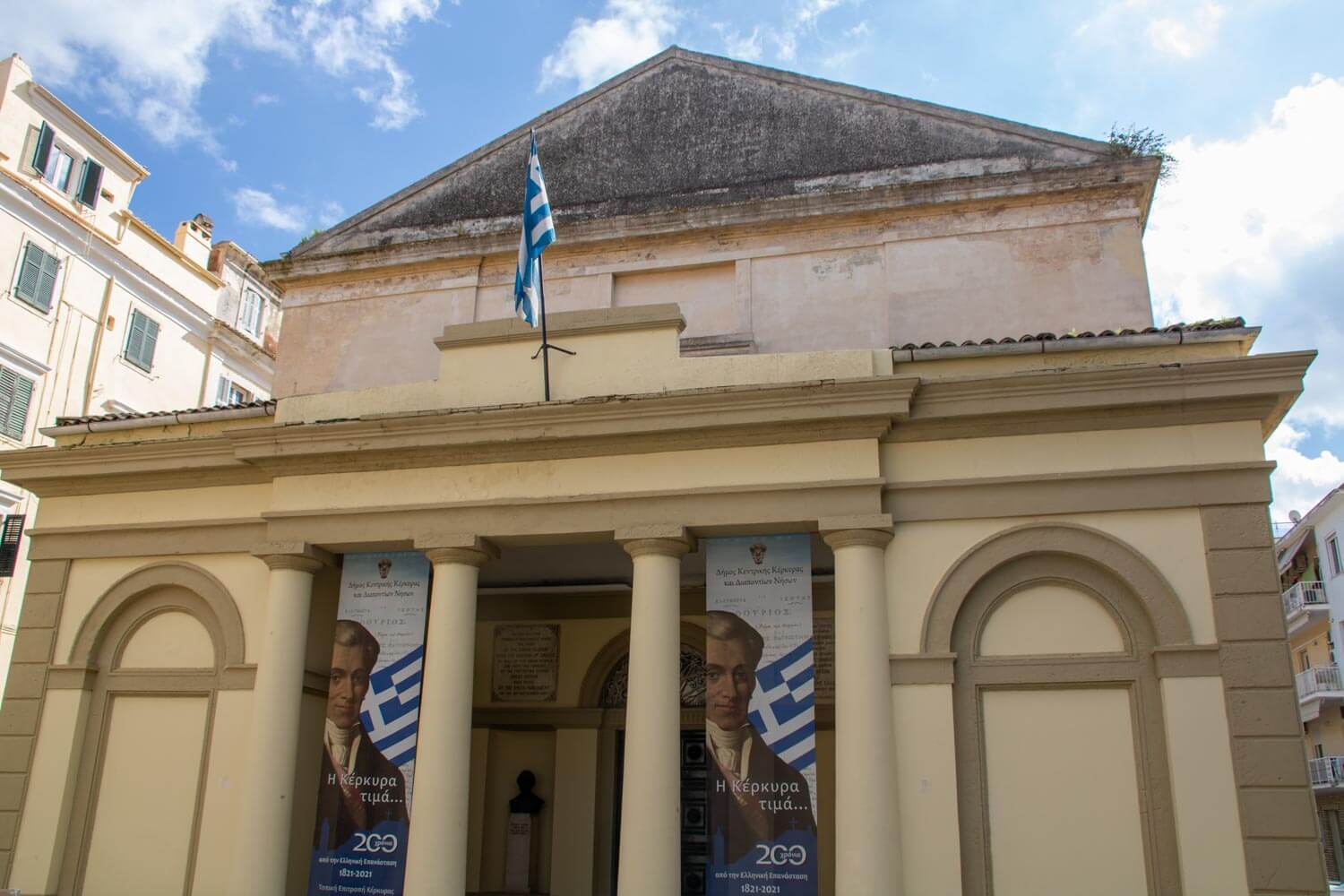
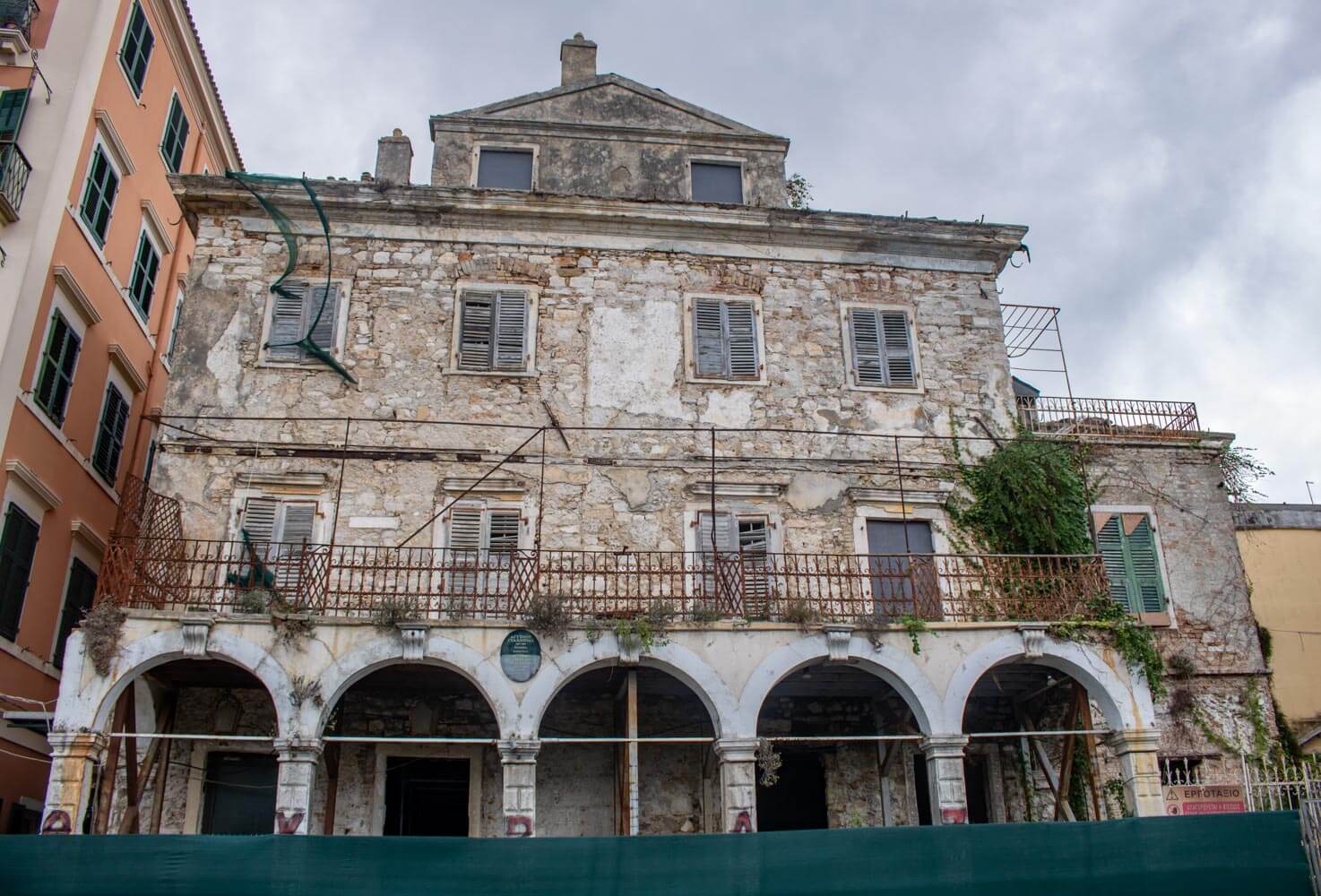
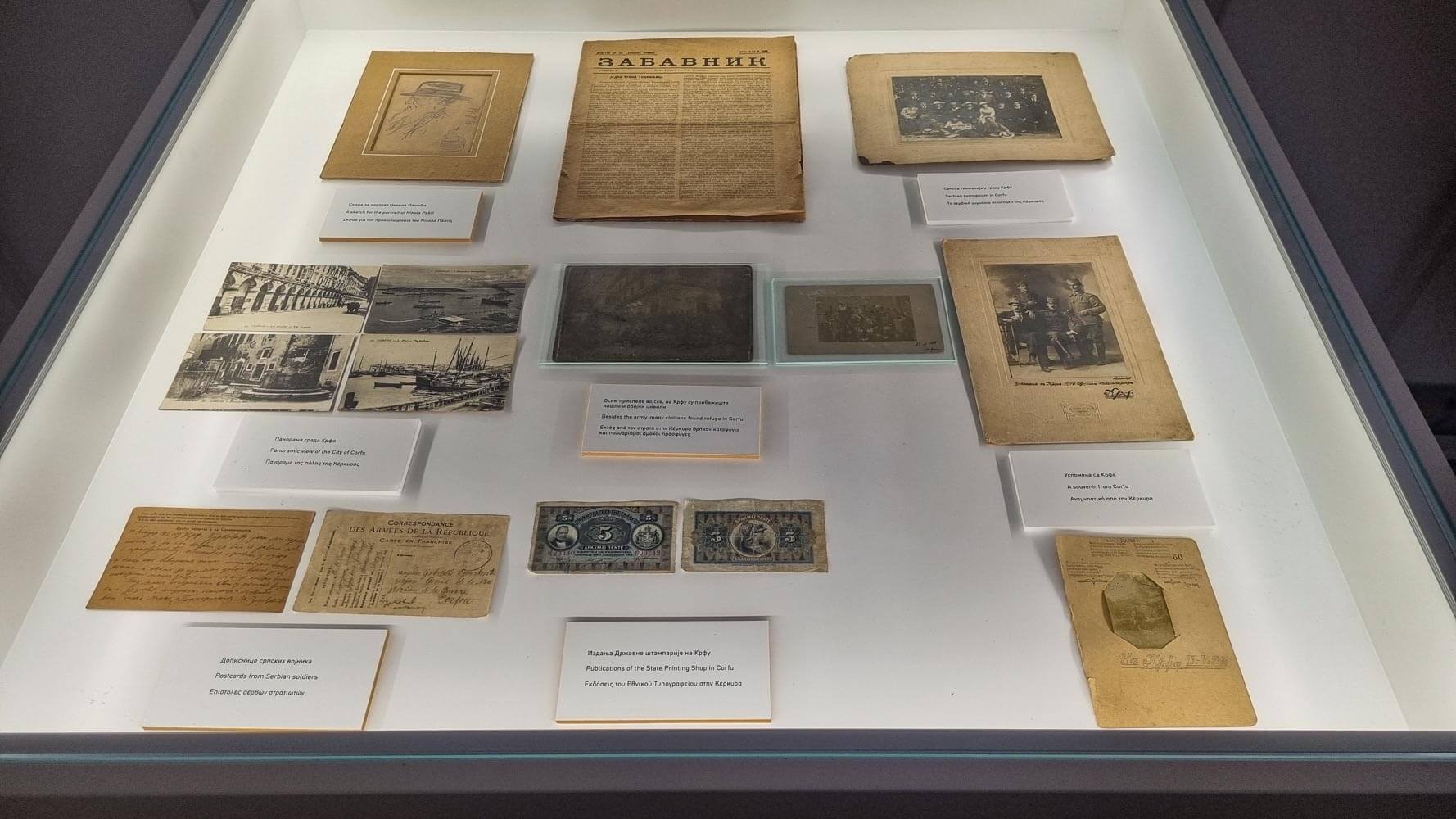
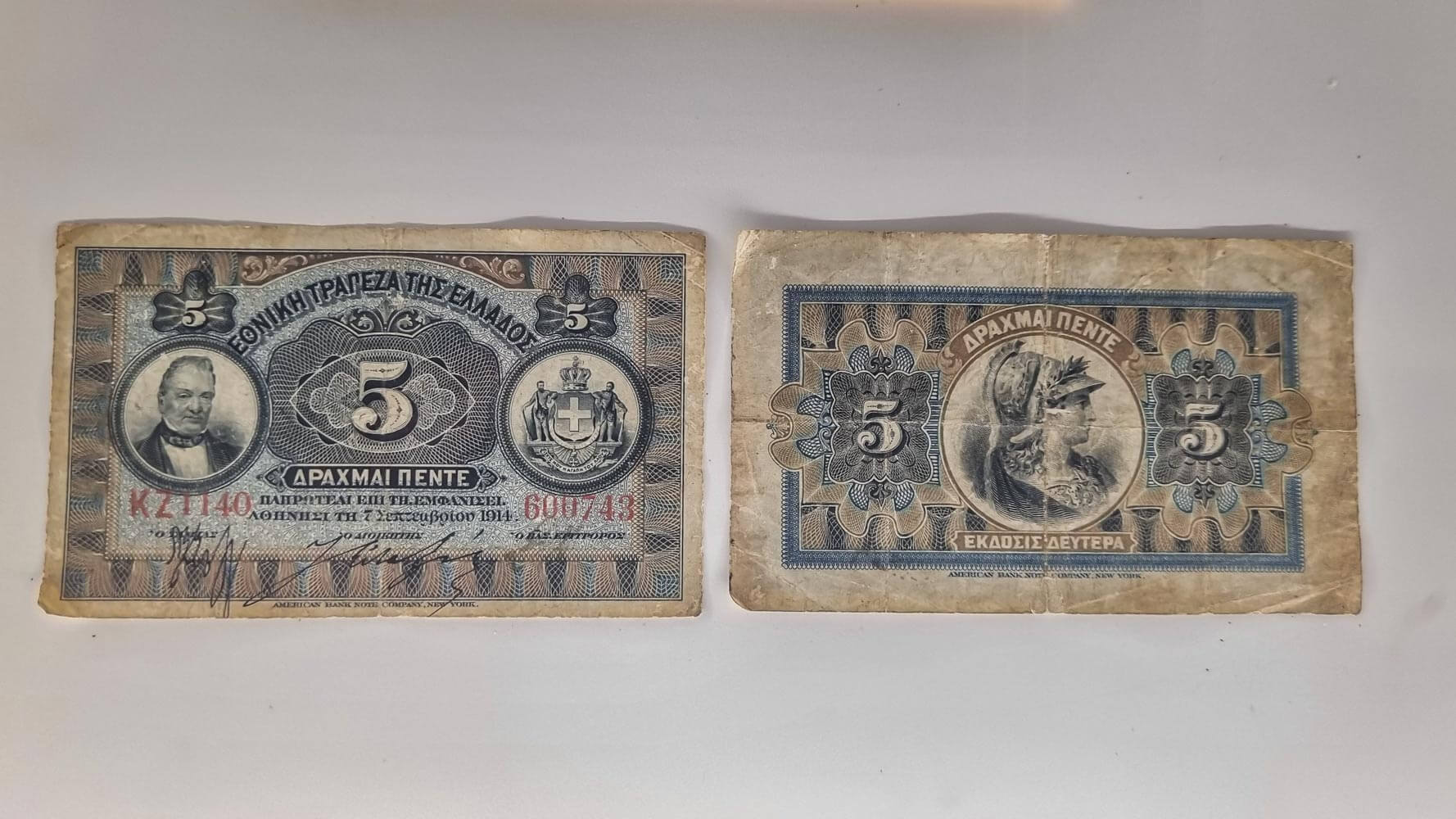
When Serbia fell under Austrian rule, the government and many of its representatives also decided to settle in Corfu where they stayed until the end of the war in January 1918. Unofficially Corfu became the temporary capital of Serbia for two years, with the Municipal Theater functioning as the Serbian Parliamant while hotel Bella Venezia hosted the government. The national state printing house was set up in Corfu Port, and with the help of a Corfiote printer, Serbian banknotes were printed and issued and the newspaper Srpske Novine (Serbian News) was published three times a week.
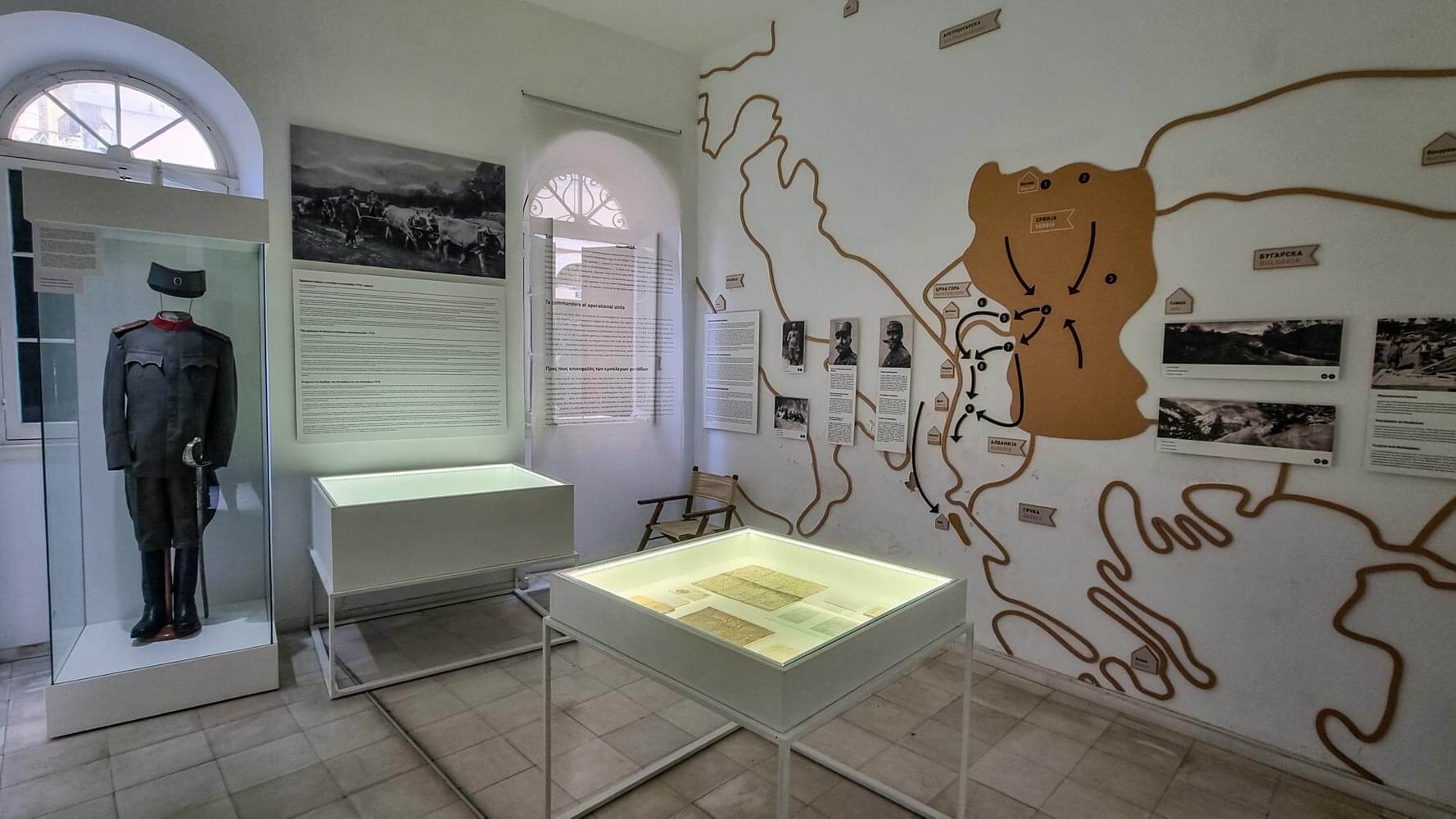
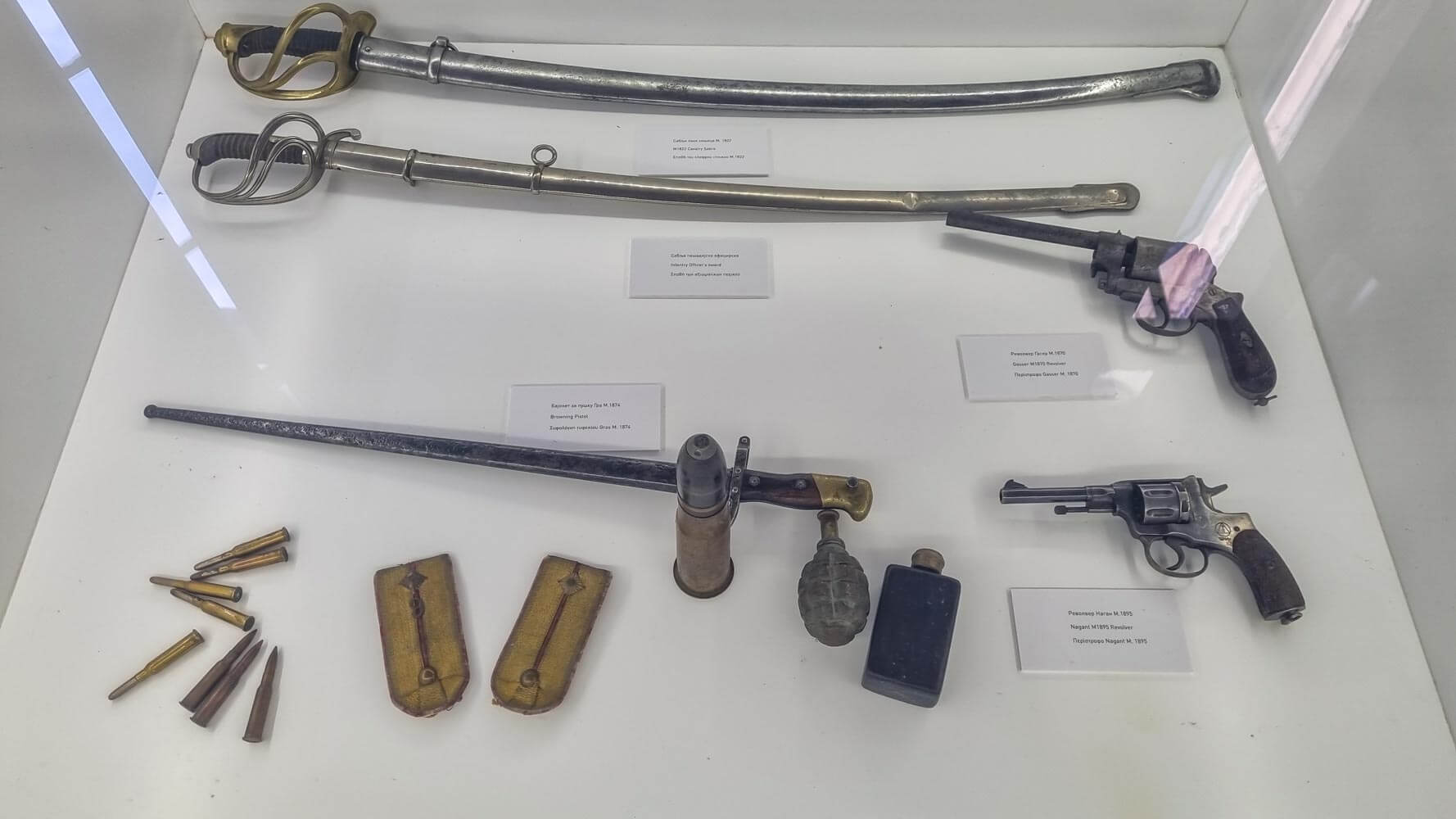
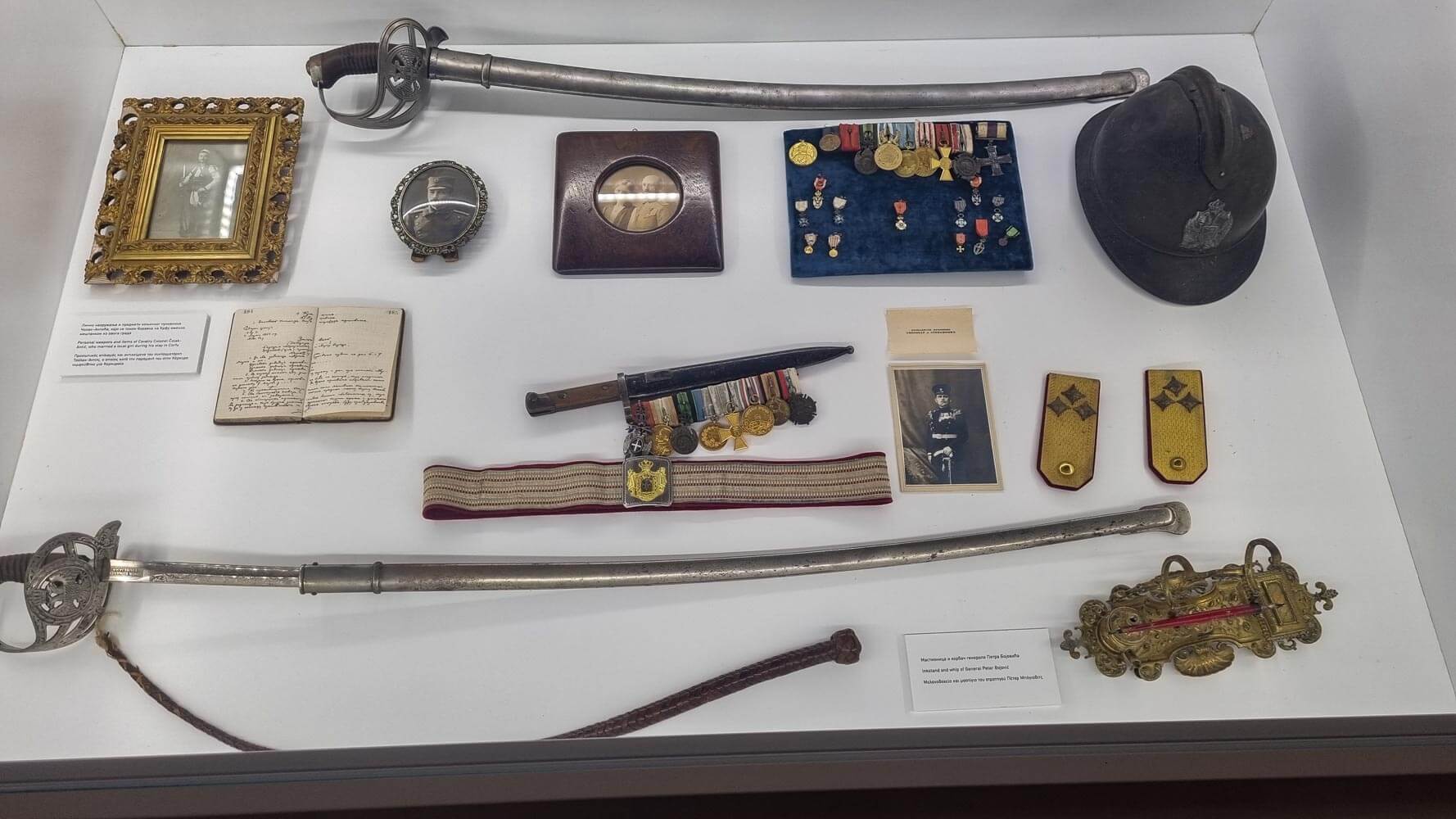
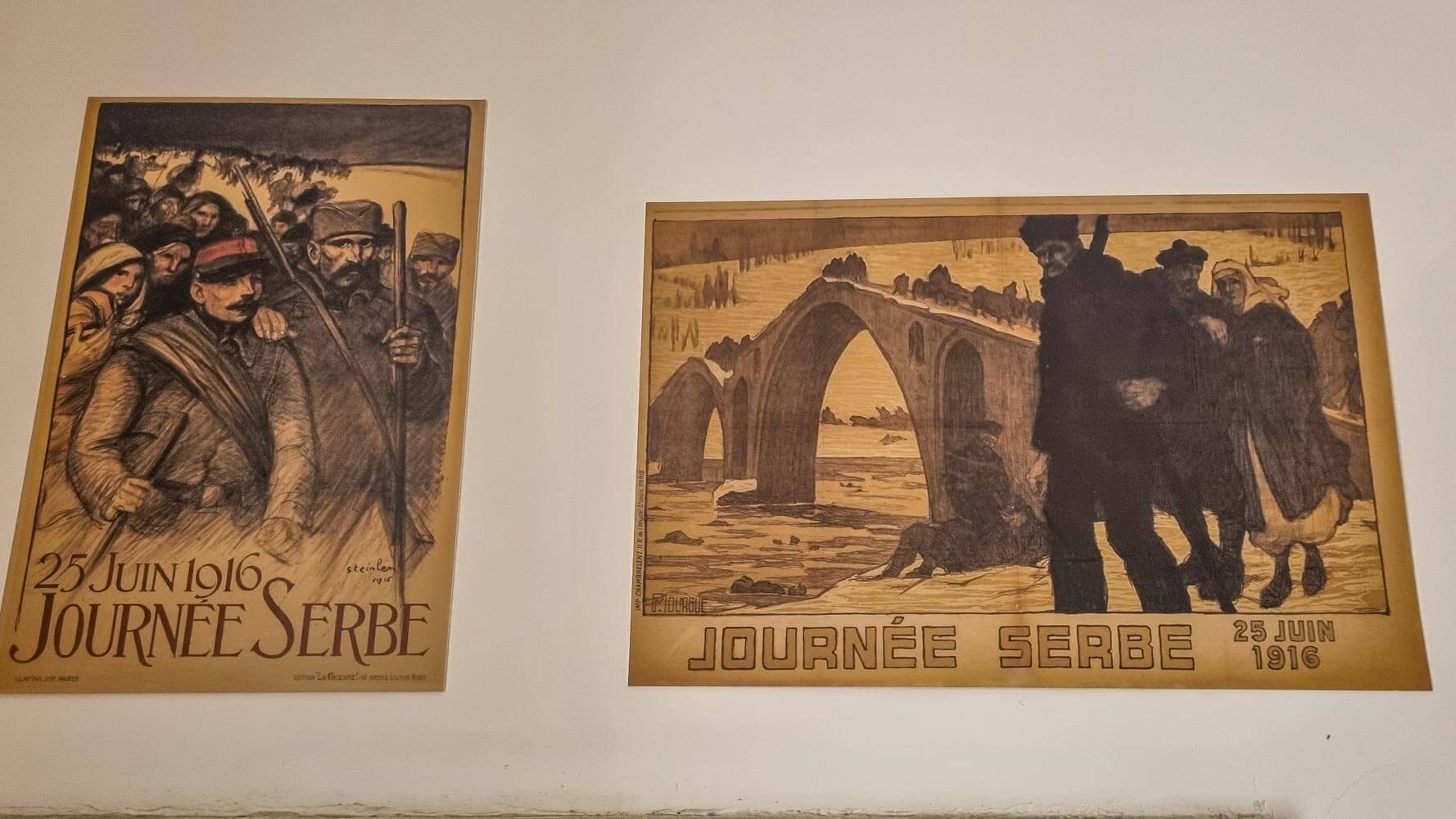
In the museum visitors can learn more details about everything that happend from the start of the war in September 1915 until the end of it in 1918. Many photographs, documents, newspapers, and other exhibits can be found in the museum, including uniforms, weapons and other military equipment of Serbian soldiers and officers, constitution flags, medical tools and many other items.