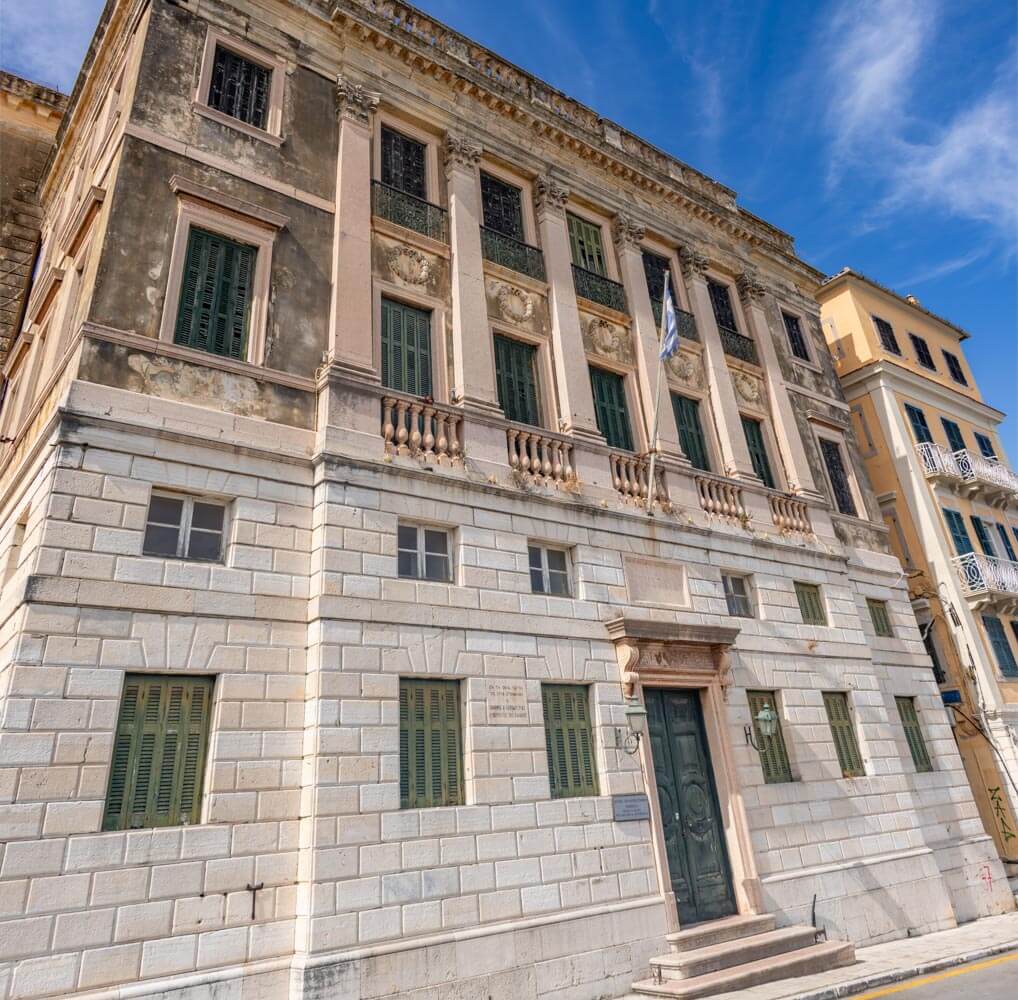
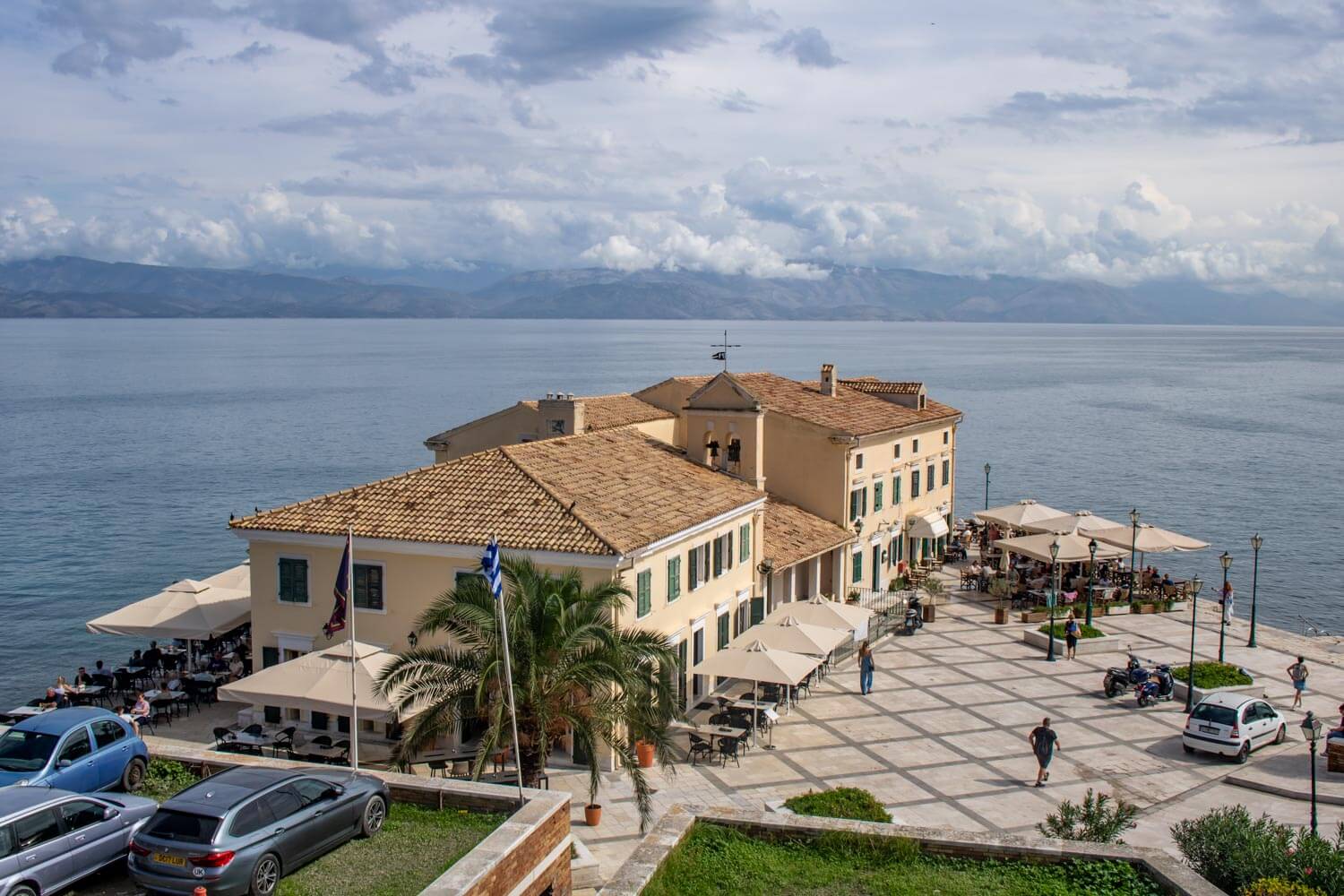
The Corfu Museum of Asian Art is housed in the Palace of Saint Michael and Saint George, one of the largest and most impressive historic buildings in Corfu Town. The palace is located close to the Old Fortress of Corfu and north of Spianada Square. It is also known as the Royal Palace, City Palace, or by the Greek name Palaia Anaktora (Old Palace).
History Of The Palace
The building of the palace was commissioned by the British Lord High Commissioner of the Ionian Islands, Sir Thomas Maitland, and took place between 1819 and 1824. The palace was designed by the British architect George Whitmore, and its style can be described as Greek Revival and neoclassical. It was the first building in the Greek territory that was constructed in this style. Limestone was imported from Malta for its construction which took place with the help of Maltese workers. The Maltese sculptors Vincenzo and Fernando Dimech and the Corfiote sculptor Pavlos Prosalentis took care of the sculptural works of the building.
The facade of the palace is decorated with a series of Doric columns and has a large triumphal archway on each side. Above the facade the seven emblems of the Ionian Islands are displayed.
The Palace of Saint Michael and Saint George initially served as the residence of the High Commissioner but later also hosted the Ionian Senate and the Order of St. Michael and St. George, a British order of chivalry founded by George IV that also gave the palace its name. After the union of the United States of the Ionian Islands with Greece in 1864 the palace functioned as a royal residence until World War II.
During the Greek Civil War (1946-1949), the palace temporarily housed refugees from Epirus, which caused some damage to the building. In 1954 a much-needed renovation took place after which the palace was occasionaly used for state occasions by the king. Nowadays the palace houses the Museum of Asian Art of Corfu.
Visiting The Corfu Museum Of Asian Art
The Corfu Museum of Asian Art is a museum dedicated to art from Asia and opened its doors inside the Palace of Saint Michael and Saint George in 1927. The museum initially opened as the Museum of Sino-Japanese Art exibiting the Gregorios Manos collection which had been donated on the condition that a museum should be opened to exhibit the collection. Manos was a Greek ambassador to Austria who had purchased around 9,500 Chinese, Korean, and Japanese art pieces at several auctions in the late 19th and 20th century. The name of the museum was changed to its current name after another significant donation of art from India, Pakistan, Tibet, Siam (now Thailand), and Northeast Asia came from N. Chatzivasileiou, a former Greek embassador to India and Japan. A third major donation came from Ch. Chiotakis, a Greek merchant in the Netherlands.
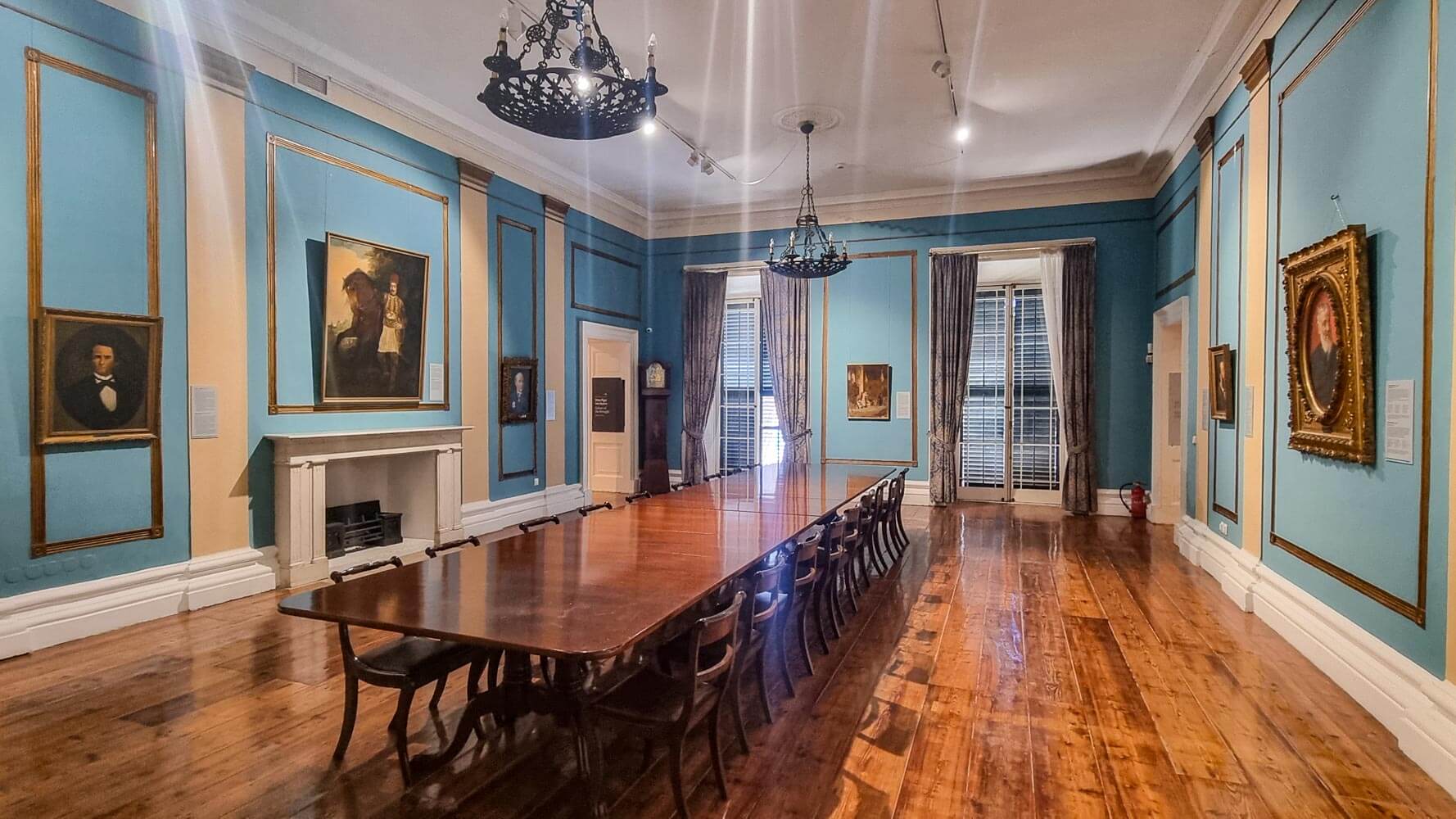
In total the museum has a collection of over 11,000 objects ranging from the 11th century BC to modern times. Art pieces include paintings, printed pictures, porcelain, sculptures, wood carvings and other artistic objects. The collections are displayed in the beautiful well-preserved rooms of the palace among ornate furniture and decorations from the era of British rule.
Municipal Gallery Of Corfu
The eastern section of the palace also houses the Municipal Gallery of Corfu, which exhibits 19th century art from local Corfiote artists, hosts themed and temporaty exhibitions, lectures, and other cultural events.
Palace Gardens
The palace gardens were built in 1833 and were only accessible to the noble people. After the name changed to the People’s Garden the area became accessible to the general public.
Statue Of Frederick Adam
Right in front of the magnificent colonnade of the palace stands the copper statue of Lord Frederick Adam. He was one of the most famous English Commissioners of the Ionian Islands and married the Corfiote Nina Palatianou for whom he build Mon Repos. The statue was created in 1837 by the Corfiote sculptor Pavlos Prosalentis who created more artworks for the Palace of Saint Michael and Saint George. The sculpture stands in the middle of a fountain and the hand of Adam directs to the water stream of the fountain, a reference to one of his great achievements, the construction of an aqueduct to supply water to the city.