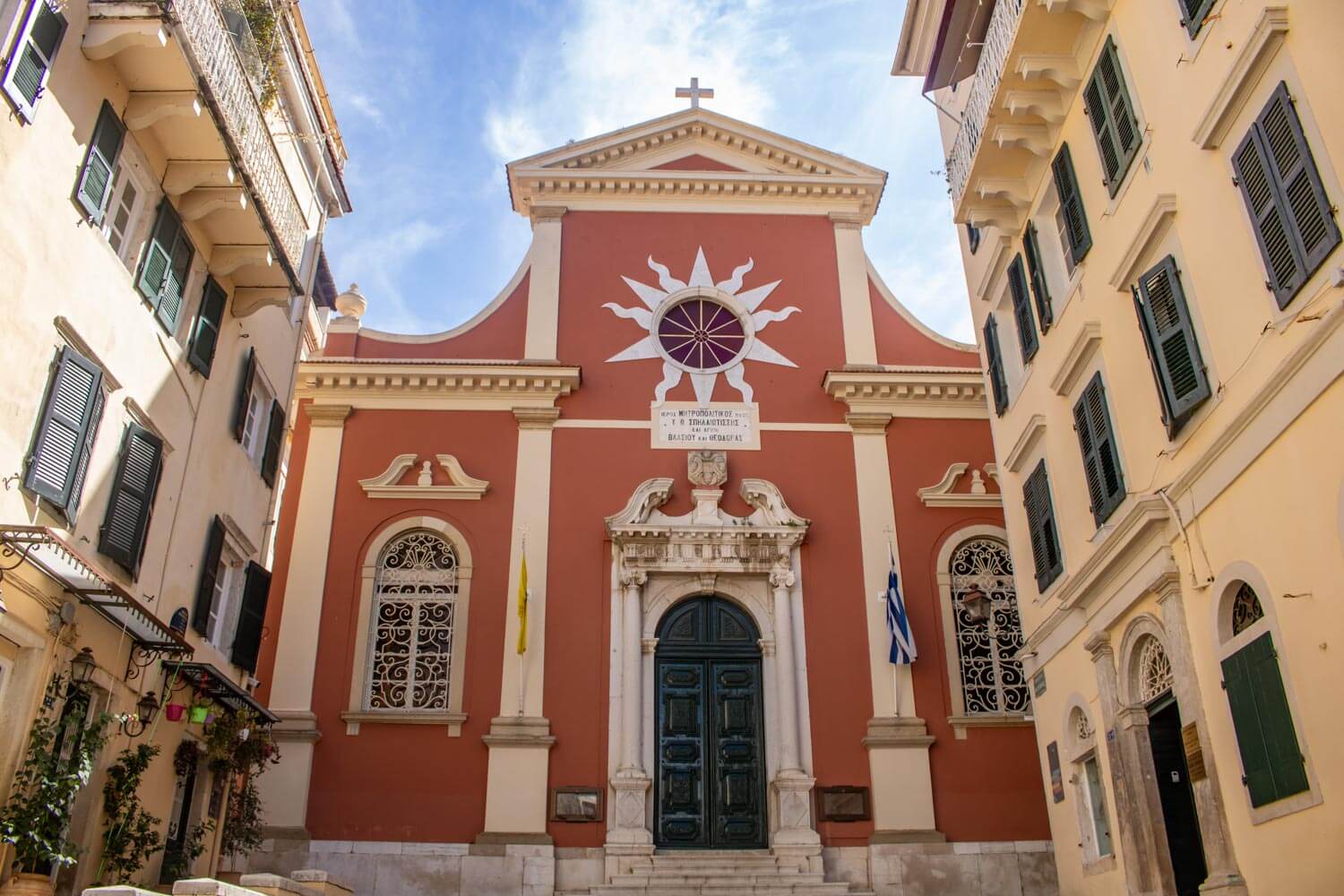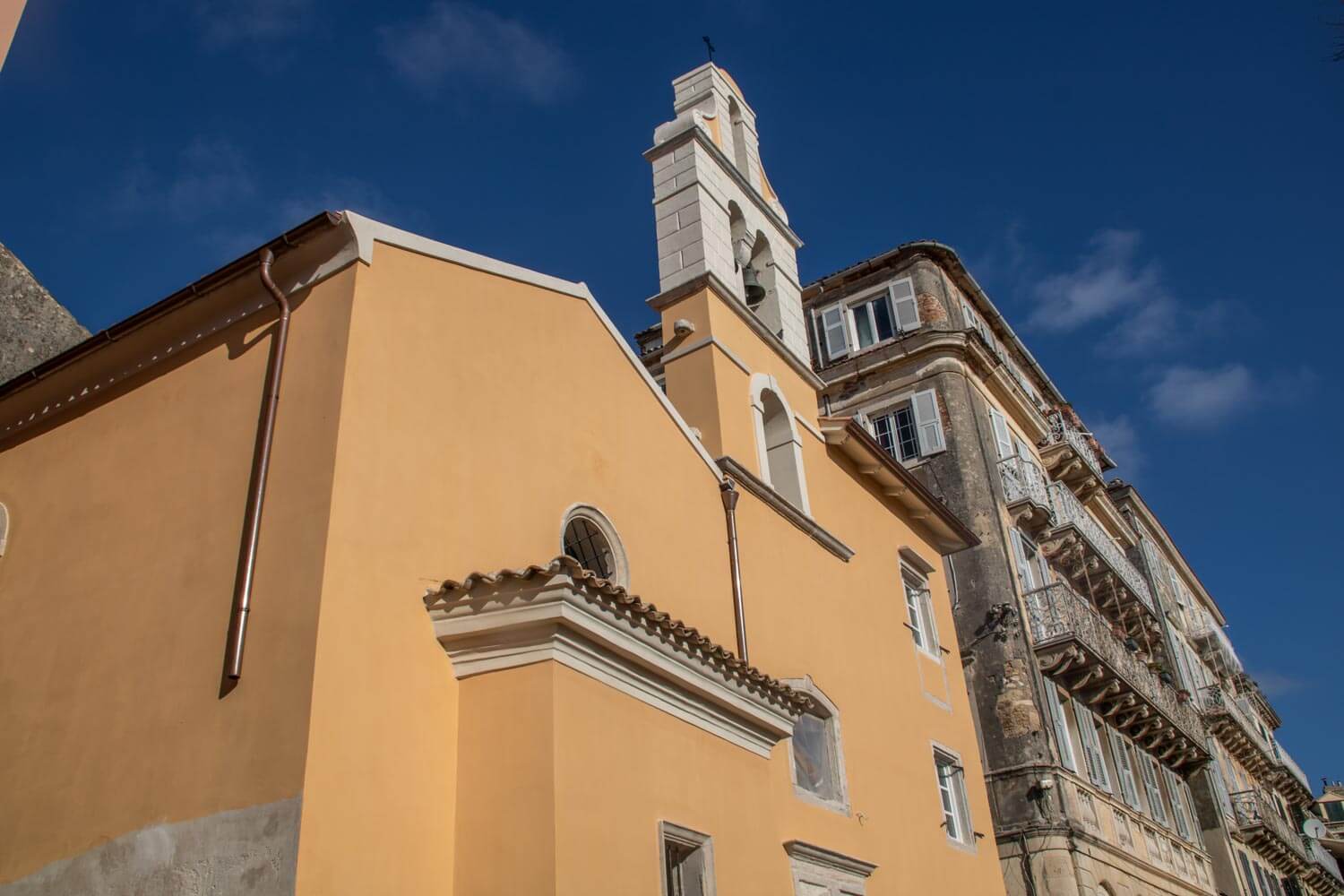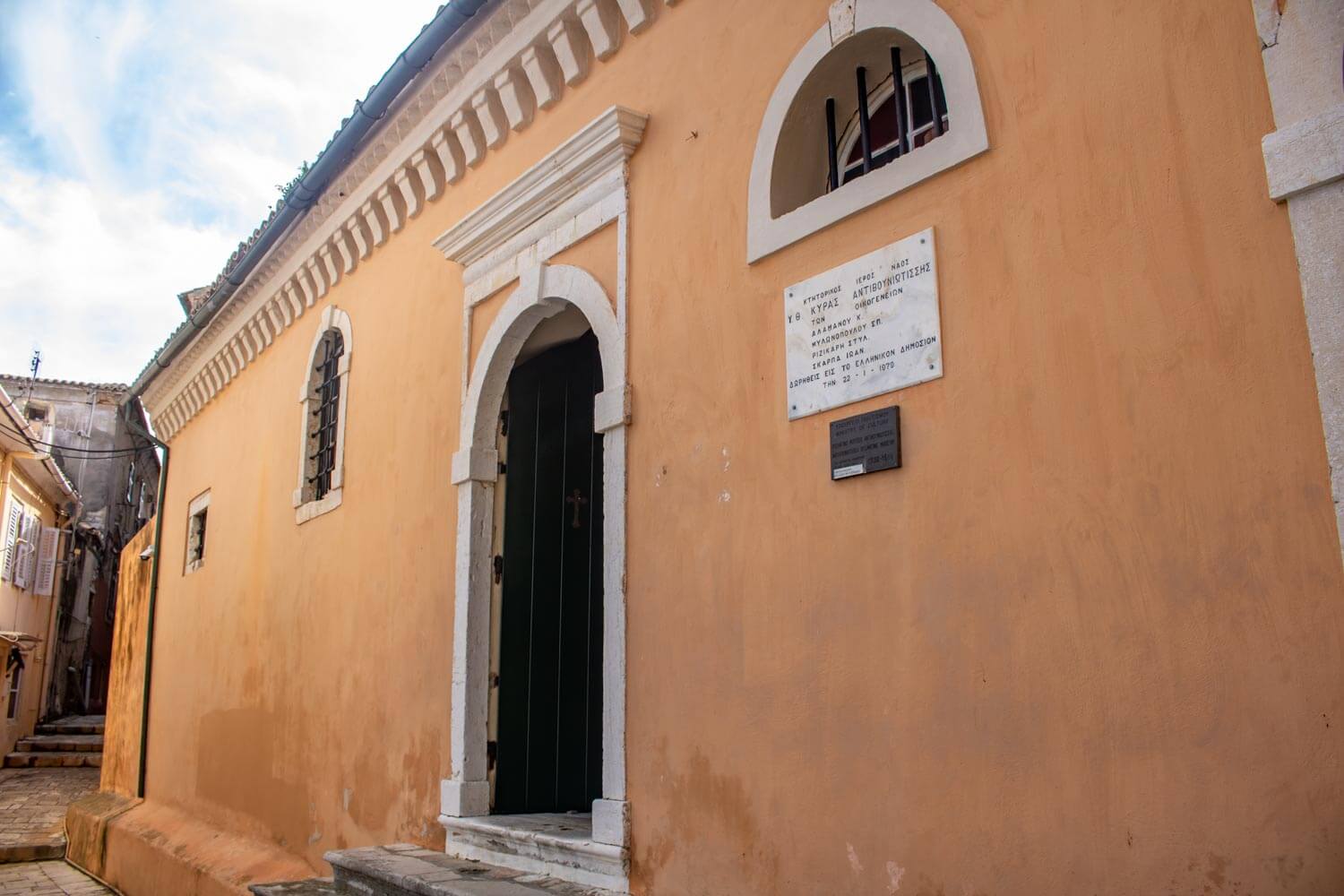
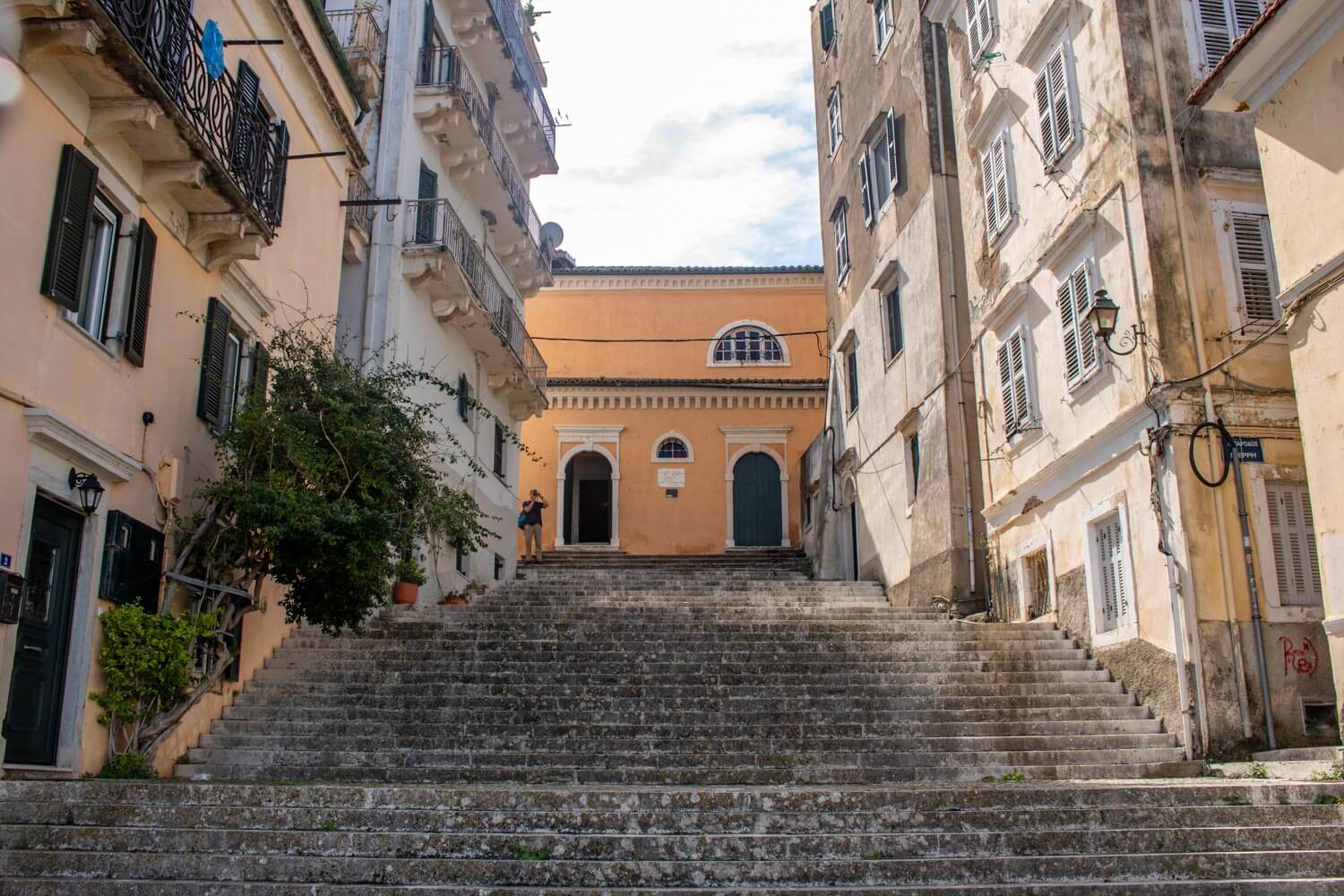
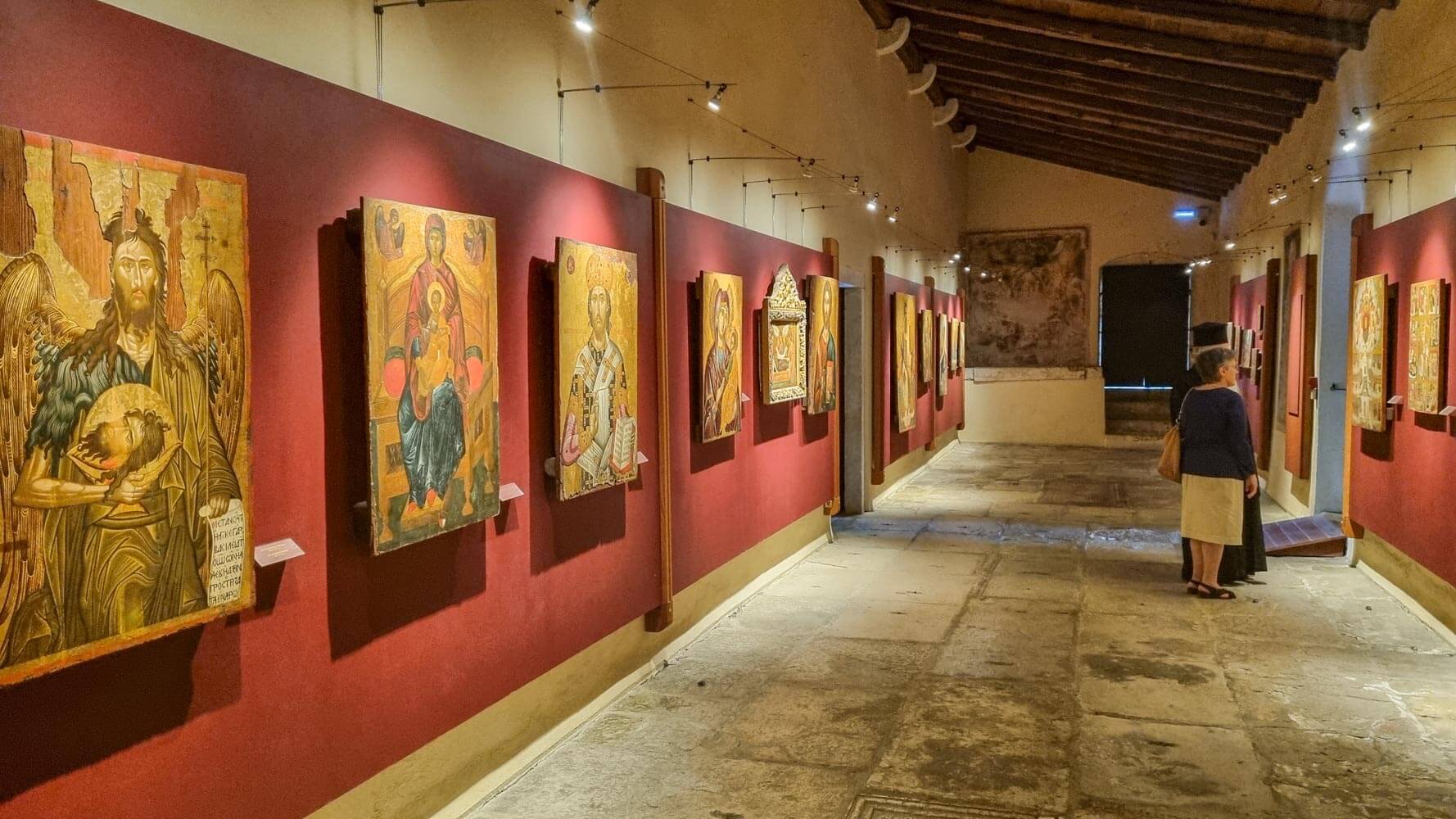
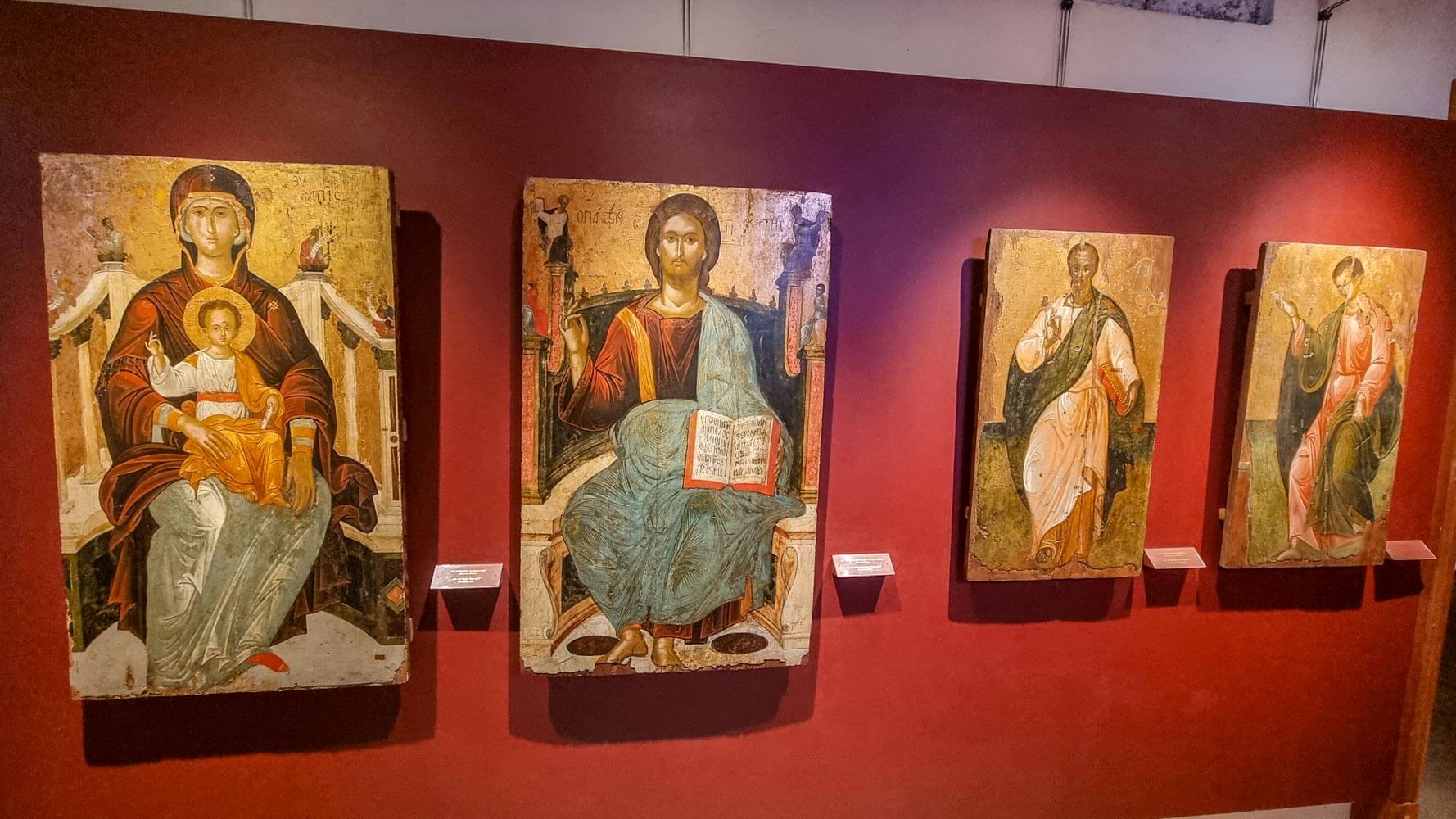
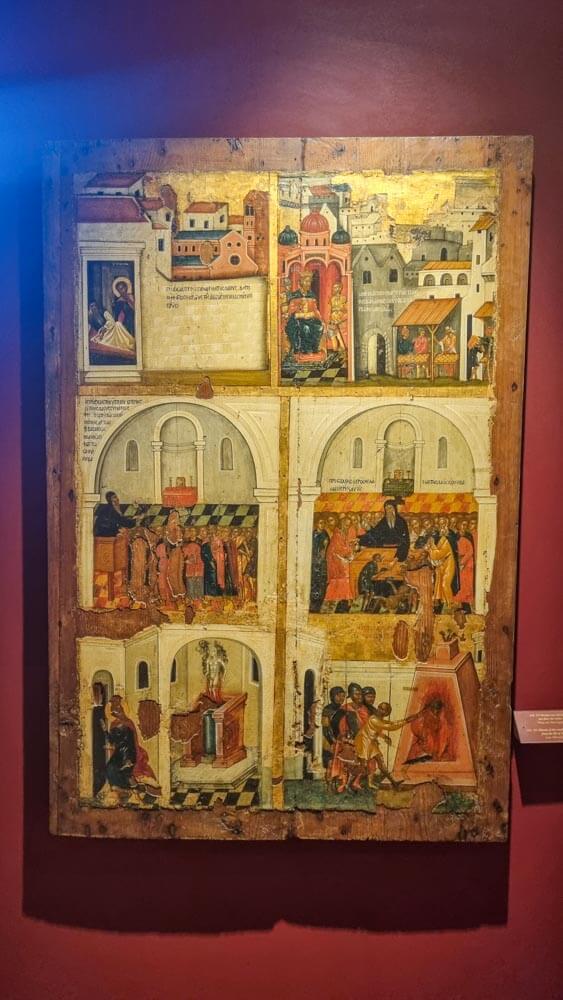
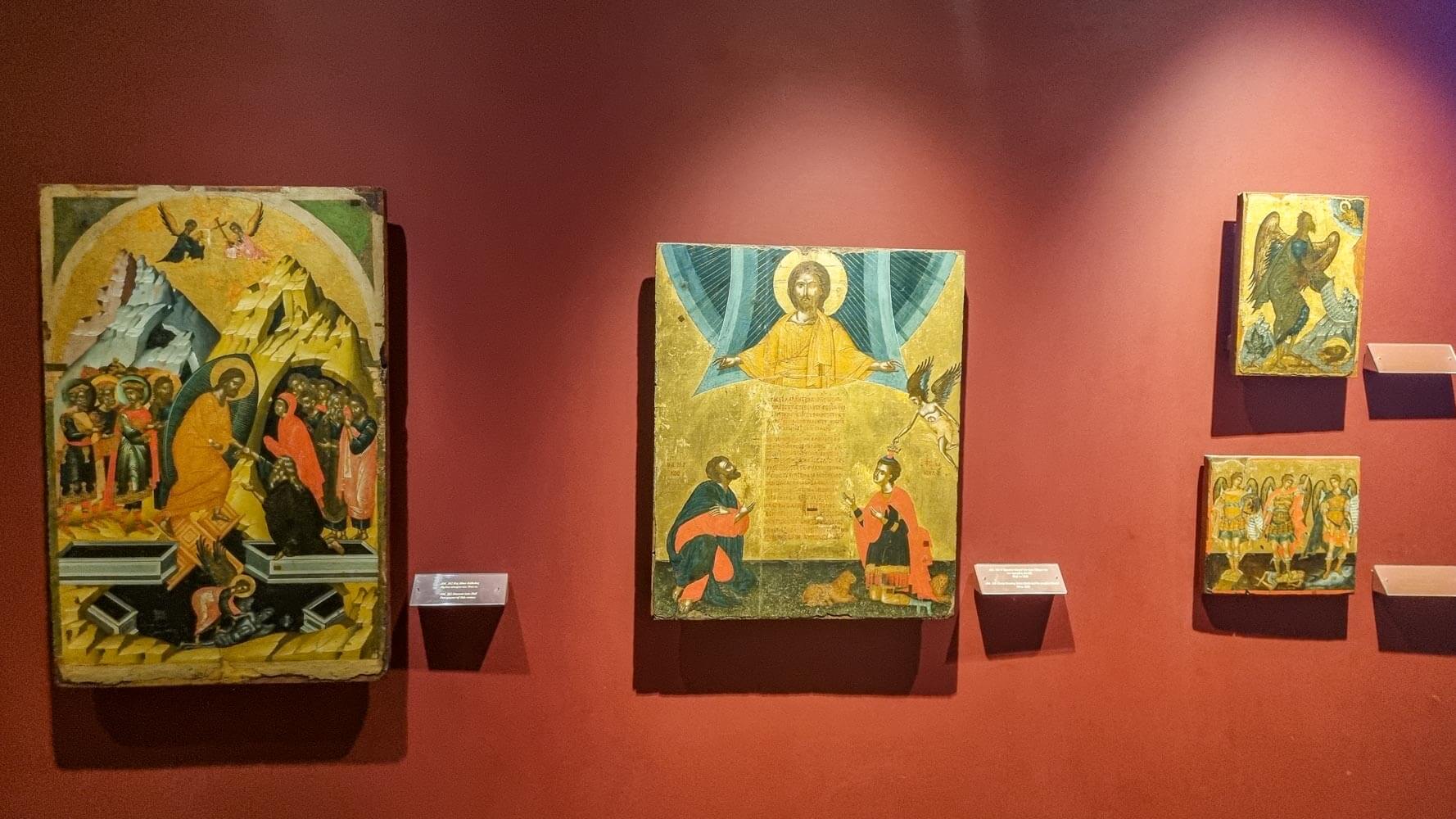
The Byzantine Museum of Antivouniotissa is a museum of religious post-Byzantine art housed in the Antivouniotissa Church in the historic center of Corfu Town.
History Of The Church
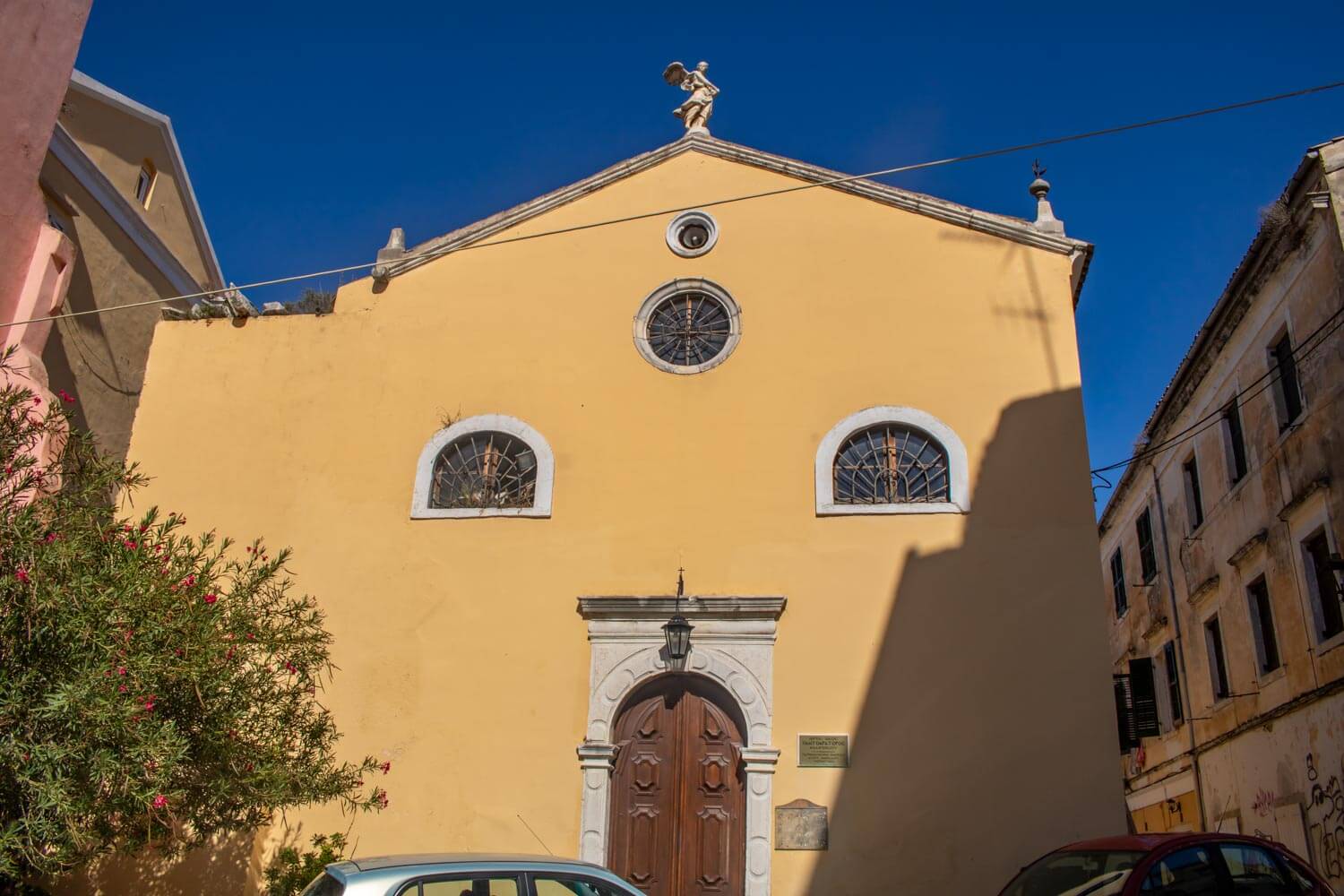
The Antivouniotissa Church was built at the end of the 15th century, making it one of the oldest surviving churches in Corfu. The church is dedicated to the Holy Virgin of Antivouniotissa, which means ‘opposite the mountain’. The structure has a single nave with a timber roof and preserves many characteristics of a typical Corfiote Heptanese basilica, including an exonarthex surrounding the church on three of its four sides.
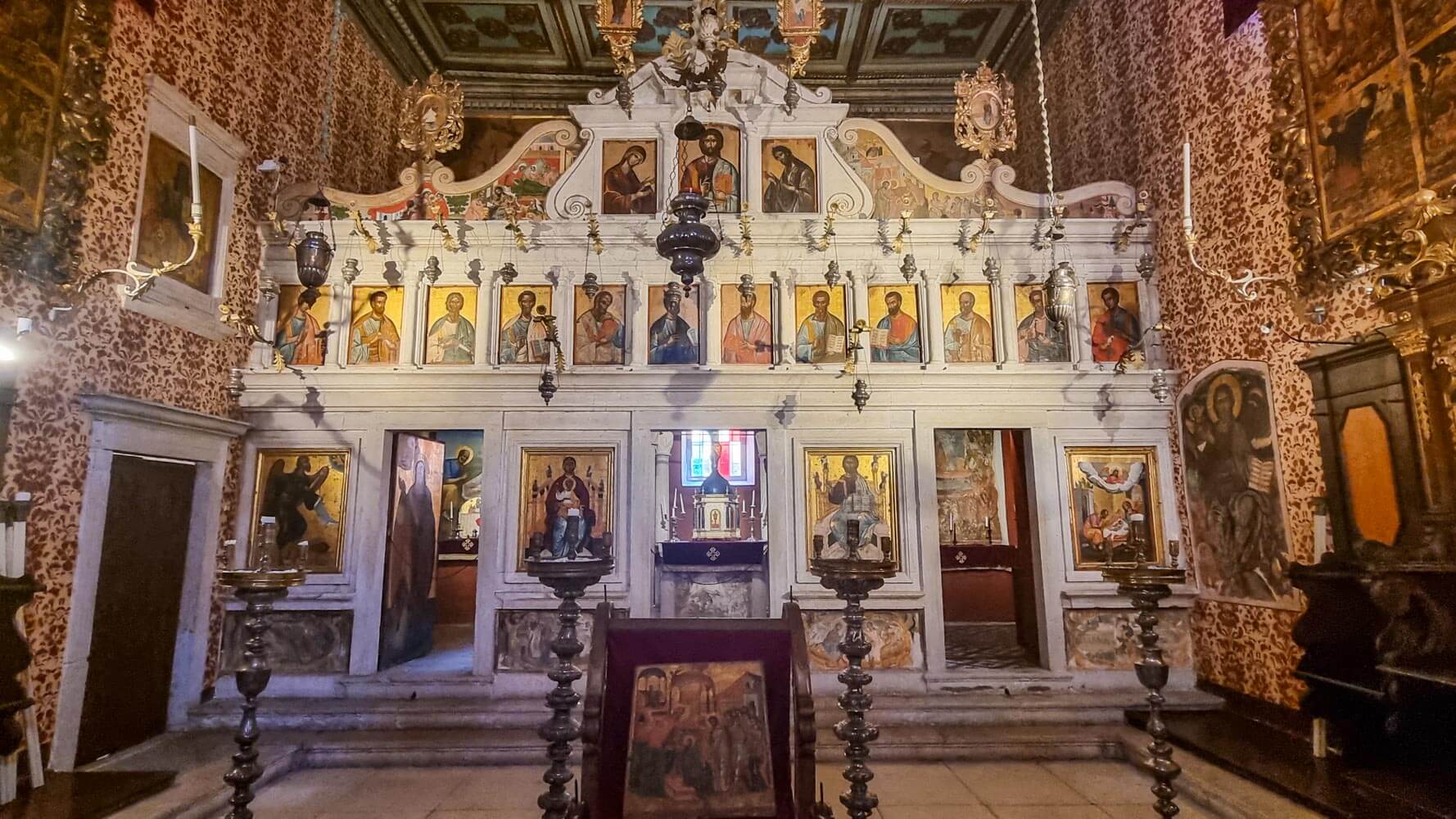
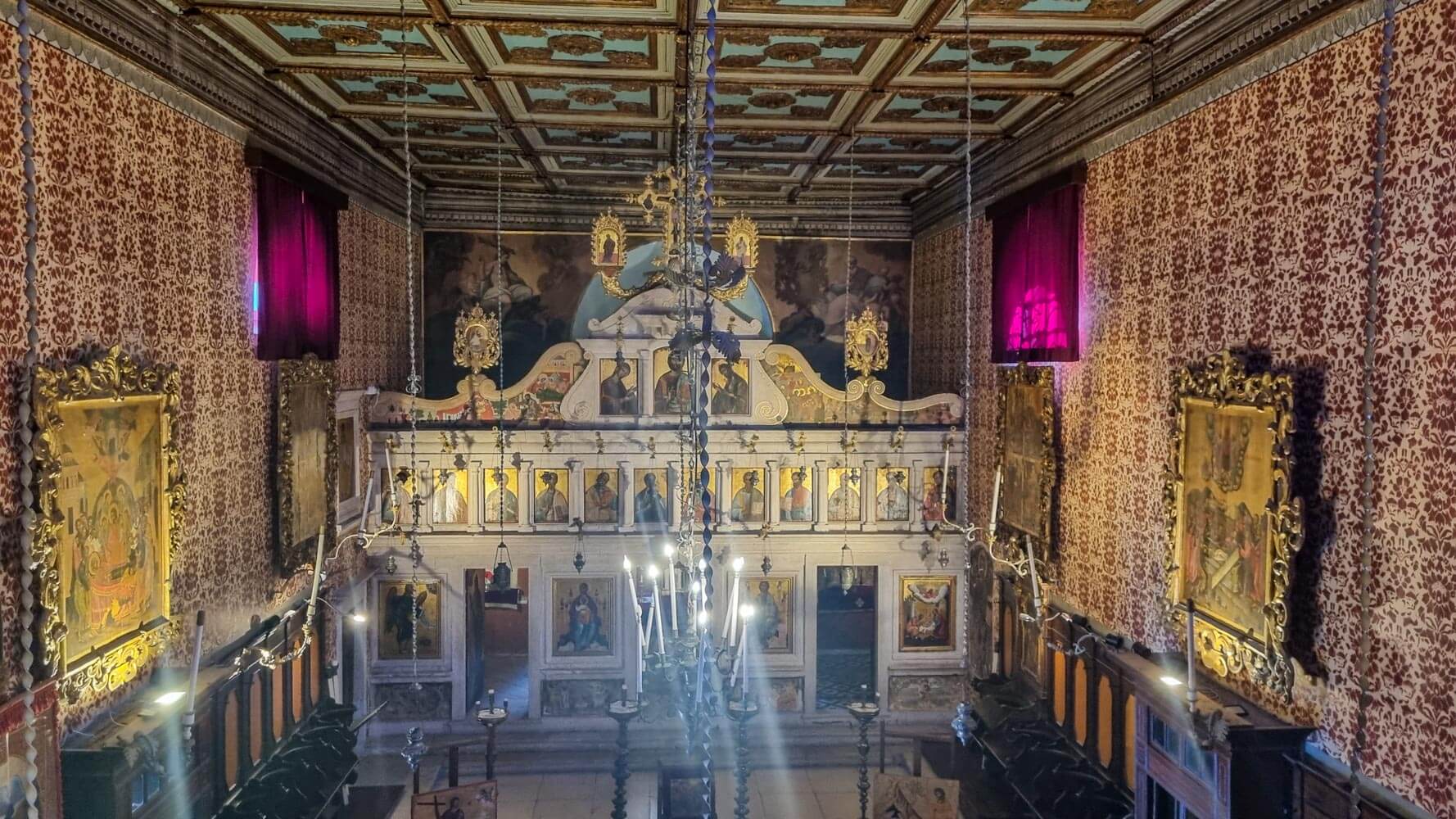
The exterior of the church has arched doorways and windows and is sparsely decorated with only a dentilated cornice. The church is much more impressive from the inside, which is richly decorated. On the eastern side where the belfry is incorporated, there is an atrium overlooking the beautiful interior of the nave. There are high pews, painted tapestries, an impressive white iconostasis with painted icons, and the ceiling is divided into coffers and adorned with elegant wood carvings.
In 1979, the descendant families of the church’s founders donated a rich collection of heirlooms and portable icons on the condition that the church would become a museum. After a renovation, the museum was inaugurated by the Greek Minister of Culture, Melina Merkouri, in 1984.
Visiting The Museum
A ticket is required to enter the church and museum. You can either buy a ticket for the museum alone, or a combination ticket which provides access to multiple attractions, including the two fortresses and several other museums.
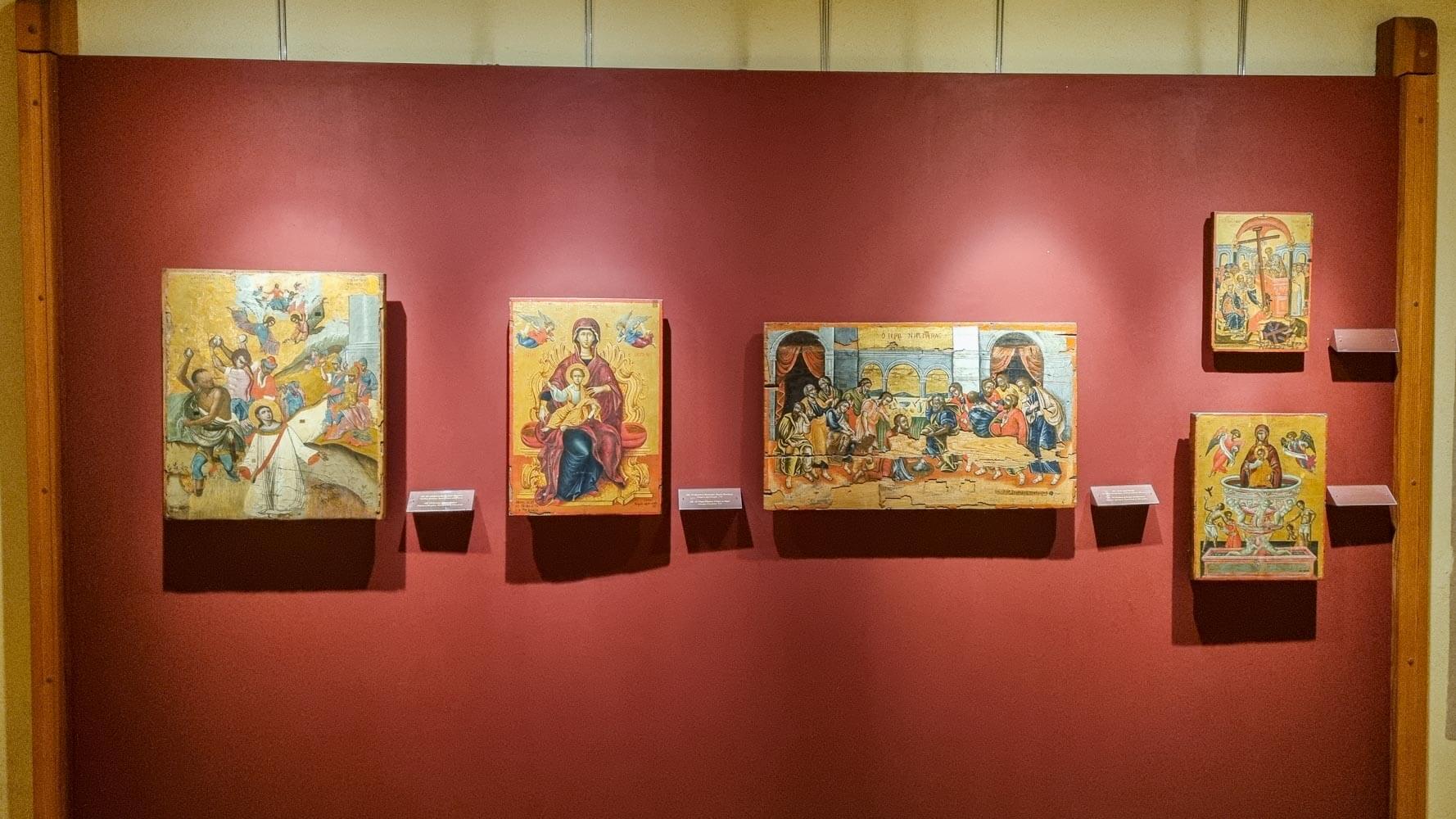
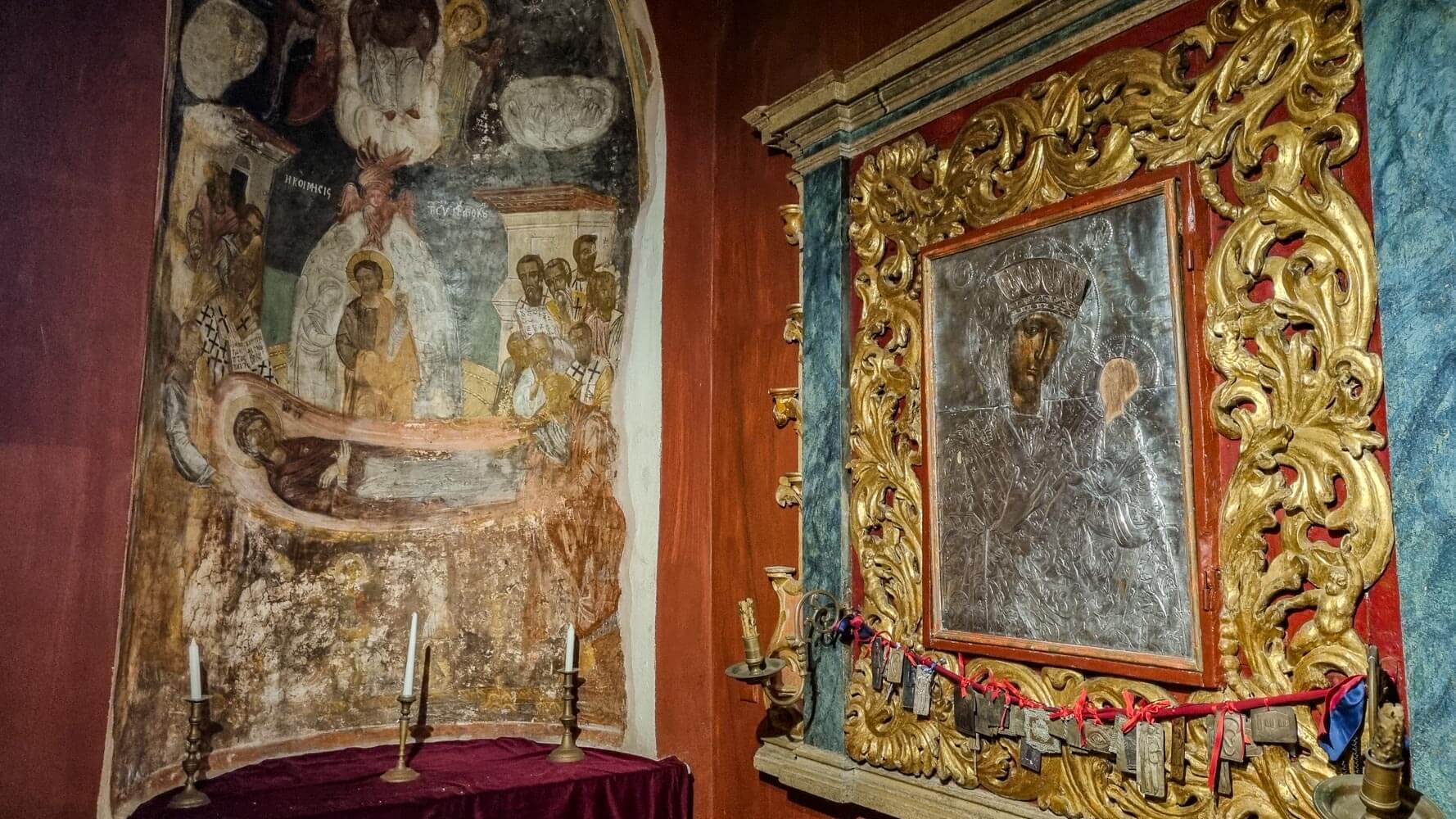
The museum collection contains important historic heirlooms and portable icons dating from the 15th to the 19th centuries. Most of the post-Byzantine Orthodox art is of the Cretan and early Heptanese schools in Corfu. This is the result of artists stopping in Corfu on their way from Crete to Venice after Crete fell into Ottoman hands in 1669.
Among the collection are works of Nicholas Tzafouris, Michael Damaskinos and Emmanuel Lambardos, but there are also works from unknown artists.